Toronto Through My Lens

Category: Parks (Page 2 of 5)

The Max Tanenbaum Healing Garden

The Max Tanenbaum Healing Garden is found on the 14th floor Atrium of the Princess Margaret Cancer Centre at 610 University Avenue. I should mention that the Healing Garden is not to be confused with the Max Tanenbaum Sculpture Garden at the Hennick Bridgepoint Hospital (click here for my earlier post on the Sculpture Garden).

A view of the Healing Garden from above
Illustration: Janet Rosenberg & Studio
Artist’s interpretation of the Garden from above. The viewing Atrium is on the right.
Illustration: Janet Rosenberg & Studio

The Max Tanenbaum Healing Garden officially opened on November 10th, 2014. It was established by the Tauba and Solomon Spiro Family Foundation in honour of Tauba’s father, Max Tanenbaum, a noted businessman and philanthropist who loved nature and the outdoors. Created as a year-round oasis for patients and visitors at Princess Margaret Cancer Centre, the Max Tanenbaum Healing Garden is a creative way to honour those who have been affected by cancer.

The challenge was to create a natural and beautiful space without using live plants in order to ensure a pleasing, year-round, no-maintenance garden on the 14th floor Atrium of Princess Margaret Cancer Centre.

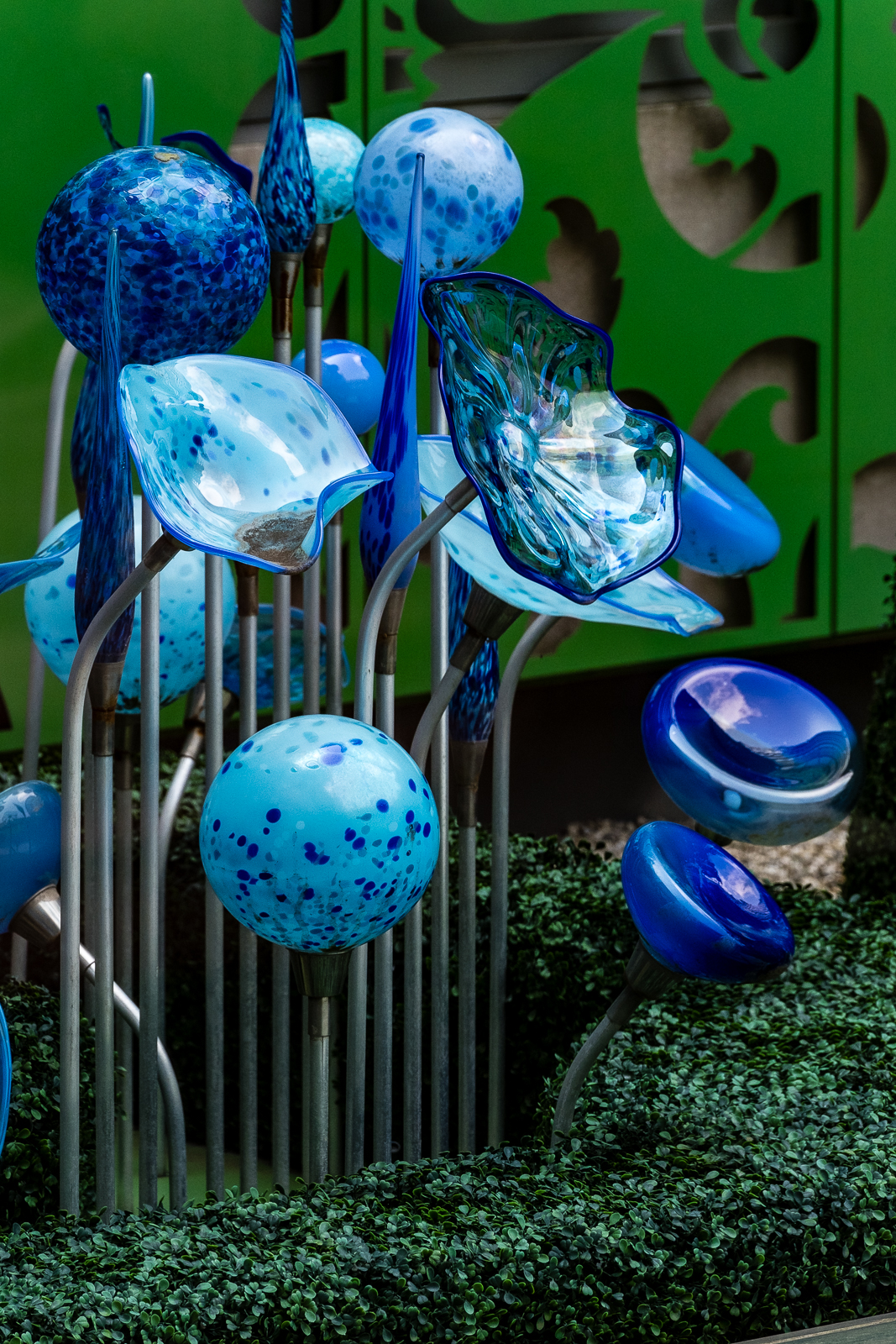
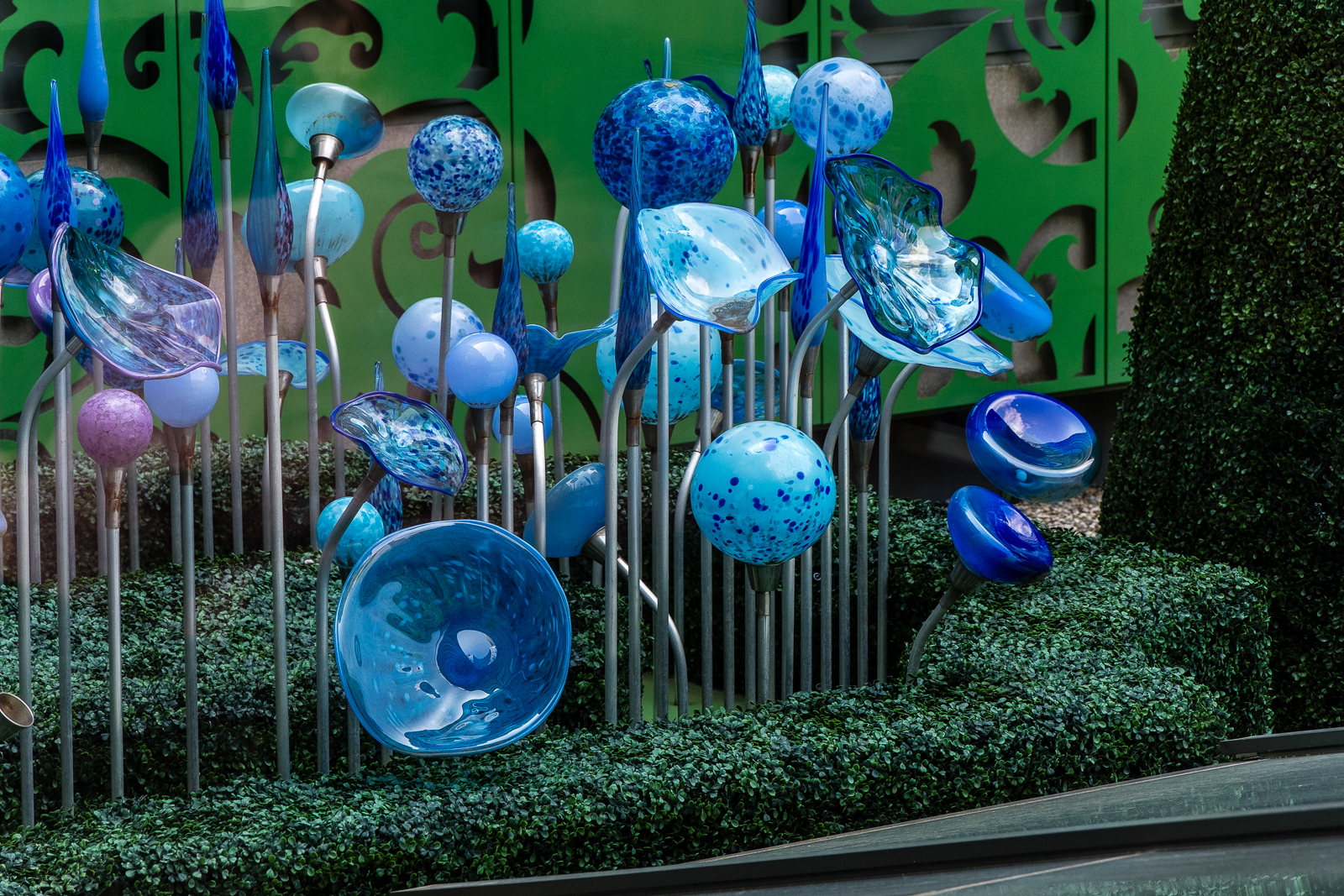
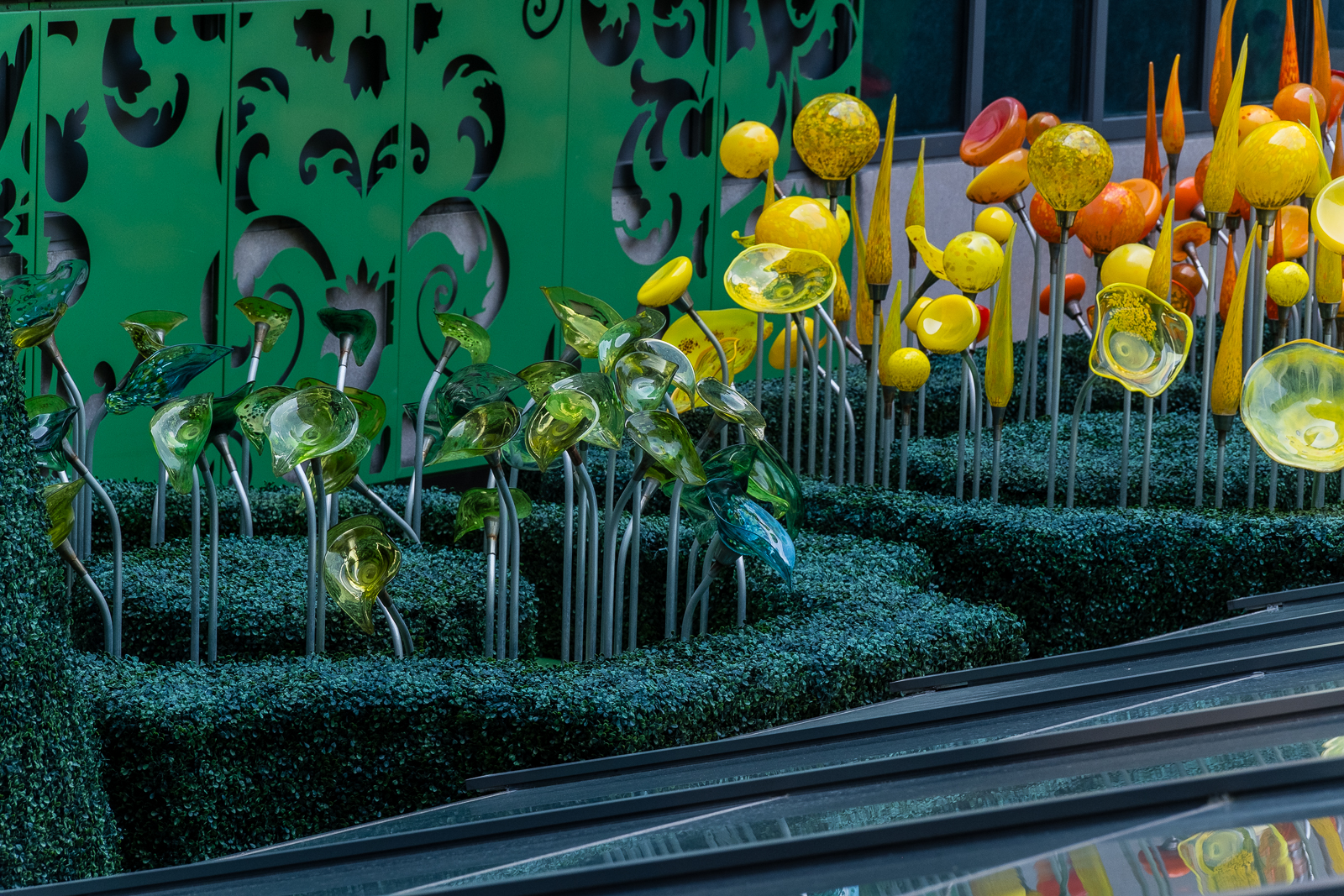
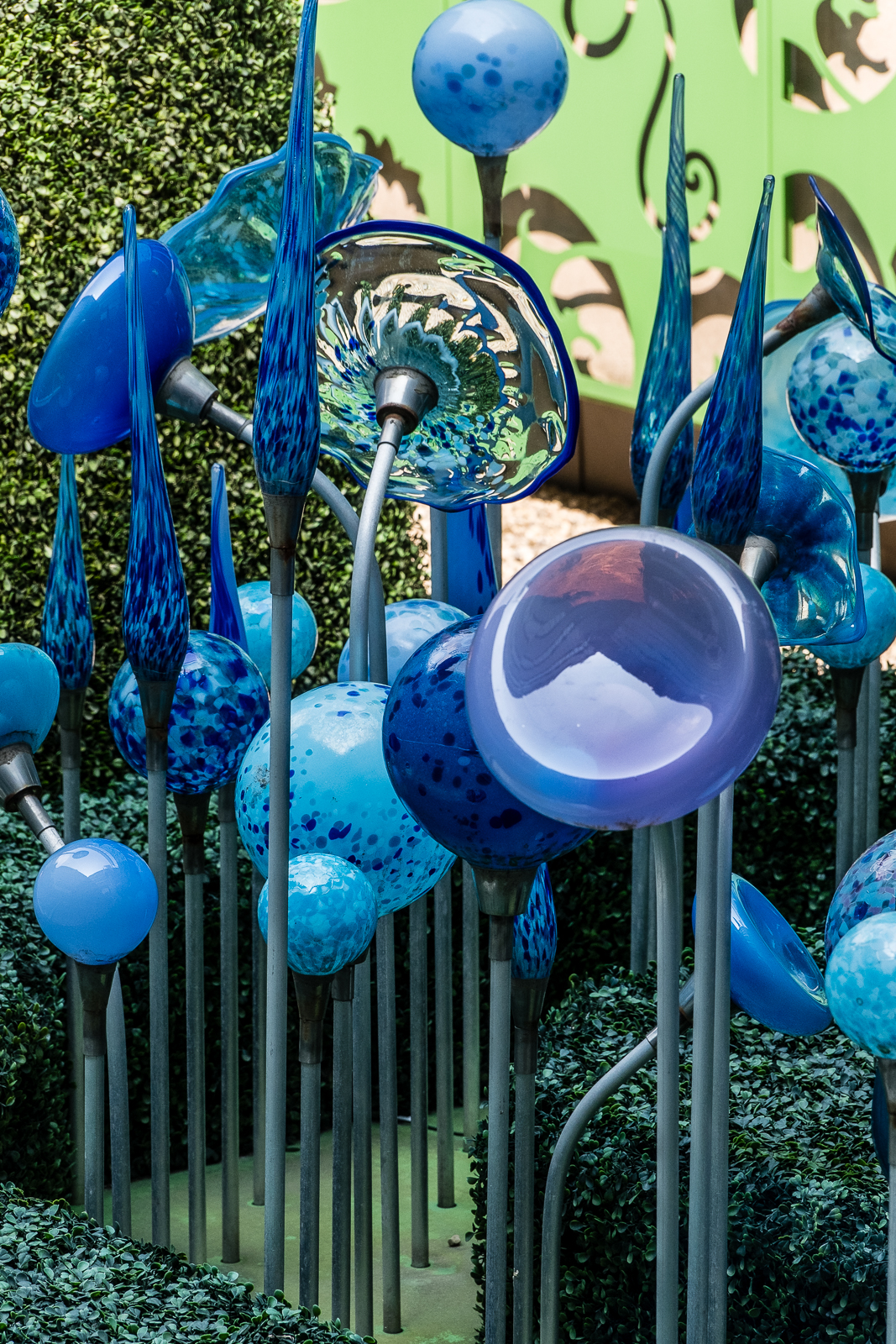
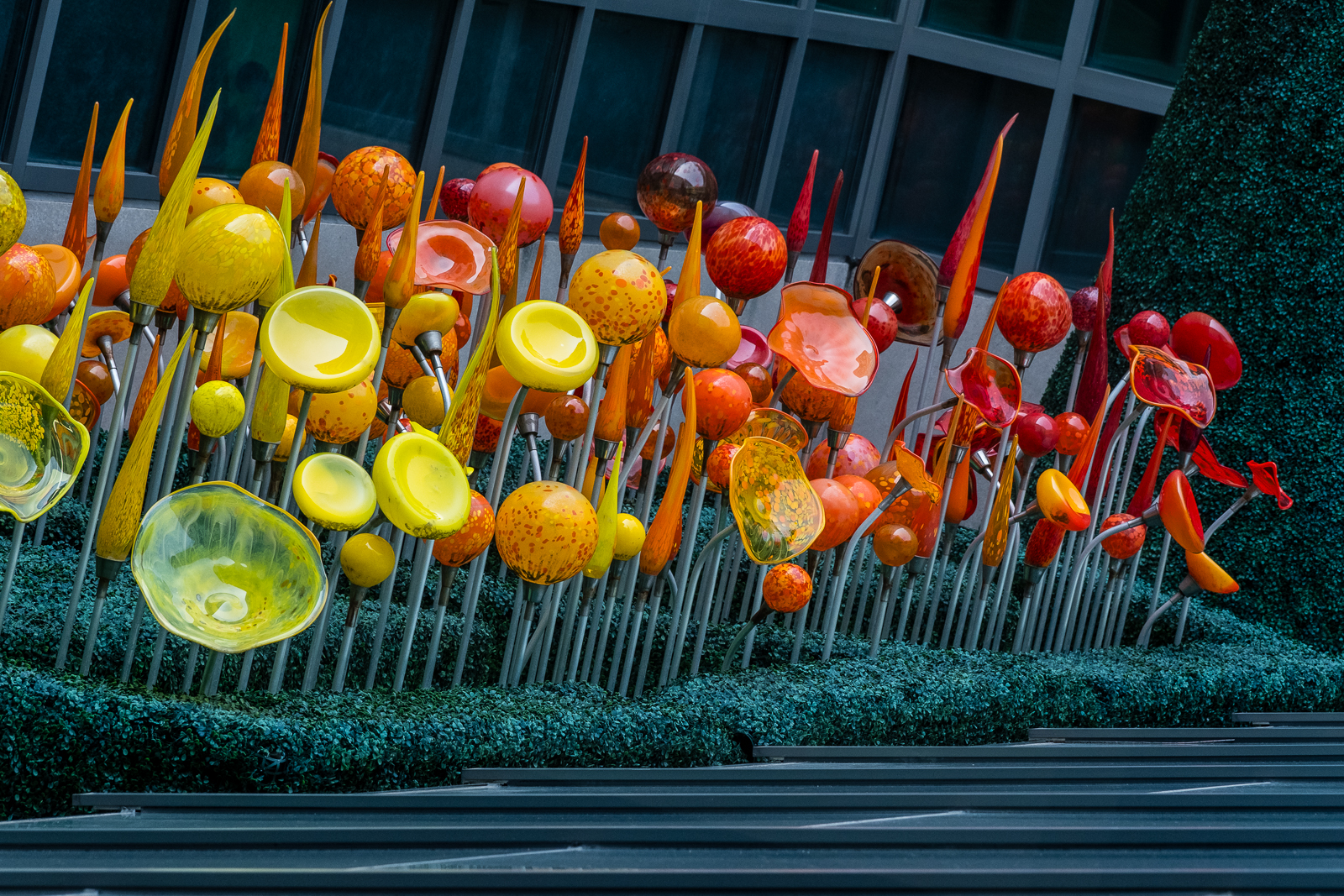
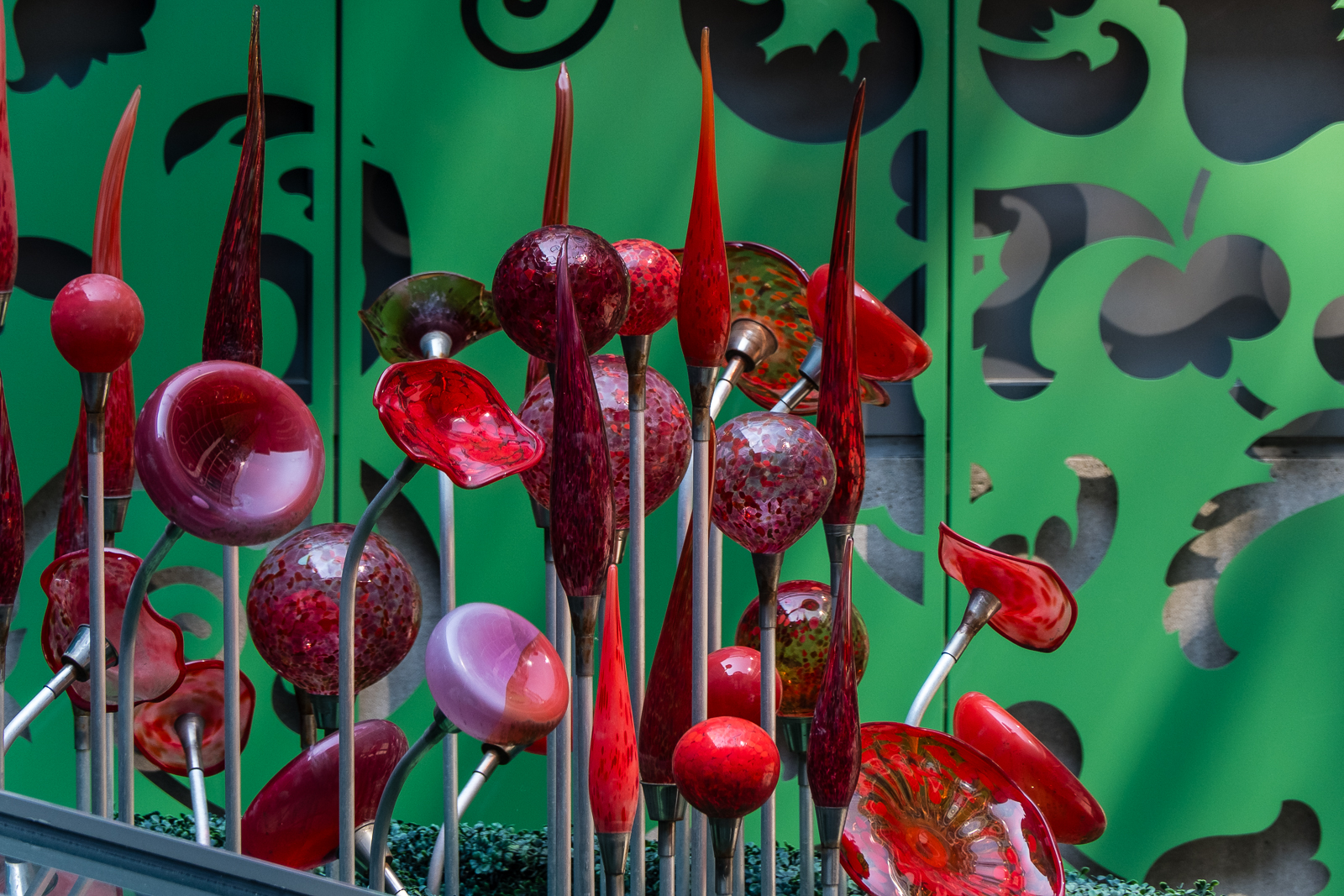
In response to this challenge came the design from Janet Rosenberg and Studio. The Studio design uses the strong, cultivated patterns of formal French gardens and incorporates the artistry of hand-blown glass flowers, enclosed by an artificial boxwood hedge. The vertical walls feature decorative panels that add another visual dimension and unify a garden rich in colour, creativity and natural forms:

The hand blown glass flowers have each been created to blend together in a colourful garden that resembles a rainbow; red, orange, yellow, green, blue and purple are all represented in the garden with flowers that carry one colour or a blend of multiple colours and tones:

Here’s a short video of the Healing Garden:

Flowers can be dedicated via a monetary gift to the Cancer Centre. Here’s a little info from the Princess Margaret Cancer Centre’s web page:

Secure a flower in The Max Tanenbaum Healing Garden with a gift of $1,000 and dedicate it to a loved one.   If you would like to make more than one dedication, then you may secure multiple flowers; each flower can be dedicated with a donation of $1,000.

The Healing Garden is a display of honour, hope and healing and is a tribute to the many loved ones who have been affected by cancer. Every flower helps us to continue making advancements in patient care at Princess Margaret Cancer Centre and carry out our mission to Conquer Cancer In Our Lifetime.

There are a limited number of flowers available – To ensure that you are a part of this beautiful display, please make your gift today. You can also call (437) 225-1711 to secure your flower over the phone.

Text reference: The Princess Margaret Cancer Foundation

Centreville, Deserted

A few years ago on a crisp, early Spring day, I crossed the Toronto Harbour and visited the Toronto Islands – Centre Island to be exact. I was curious to see how quiet things might be prior to the imminent mass invasion of families and kids from the city.

I wandered through Centreville, the children’s amusement park, marvelling at how deserted it was. I did not see another soul in Centreville that afternoon; it was kind of eerie with no one around, but I enjoyed it:

Centreville was built as part of a master plan to convert the Toronto Islands’ land usage from cottage residences to recreational uses. The park replaced the old Sunnyside Amusement Park, which closed in 1955, as well as Hanlan’s Point Amusement Park, which closed in the 1930s to make way for the Toronto Island Airport. The park opened in 1967.

The park originally had seven rides and has expanded over the years, adding one or two rides a year. The park’s buildings have a 1900s turn-of-the-century village theme:

This 1870s cast iron planter, created to commemorate Queen Victoria’s birthday, was originally located in front of St. Lawrence Market but has been relocated to the centre of the Park.

Rough Times: Floods and COVID-19

Due to flooding of many areas of the Toronto Islands, Centreville did not open in May 2017. It reopened on July 31, 2017, but three rides were unable to operate: the swan ride, bumper boat ride (due to high water levels) and the train ride (because of flood damage to the tracks). Mosquitos carrying the West Nile virus had been found on the islands but the Toronto Public Health department said that with certain precautions, visitors should not be concerned.

A Park spokesman said that the loss in revenue was CA$8 million due to the flood, and the cost of repairs was estimated at CA$6 million.

In 2020, Centreville and nearby Far Enough Farm were closed for the entire 2020 season due to the global COVID-19 pandemic. Both Centreville and Far Enough Farm opened 7 days a week for the 2021 season from July 9, until September 6, 2021. This was two months later than originally planned because of earlier COVID-19 pandemic restrictions.

During that 2021 season, Centreville installed fencing and gates around the amusement park area and charged grounds admission fees. Individual ride tickets were not made available for that operating season and only all-day ride passes were offered for anyone going on the amusement rides. All ticket sales moved online as well and needed to be purchased in advance. The park also implemented COVID-19 screening on all visitors and reduced capacity limits.

Centreville: Post-COVID

On a more uplifting note, business appears to be back to normal at Centreville. The marketing plug on their website reads:

With more than 30 rides and attractions and 14 mouth-watering food outlets, Centre Island’s iconic Centreville Amusement Park is the ultimate summer destination for families with young children!

Surrounded by 600 acres of gorgeous parkland and just across the harbour from the City of Toronto, you and your family can spin yourself silly in the Twirling Tea Cups, take a plunge in the Log Flume or bounce around in Bumper Boats and Bumper Cars – plus don’t forget to ride our Antique Carousel!

The Toronto Island Park is operated by the City of Toronto and open year round. Centreville Amusement Park is located within the Park and operated by William Beasley Enterprises Ltd.; it is open seasonally between May and September.

Tickets and passes for the Centreville Amusement Park can be purchased online or at the front gates.

Underpass Park

Underpass Park is truly an interesting and unique place in Toronto. Opened on August 2, 2012, the Park is located under the Eastern Avenue, Richmond and Adelaide overpasses. The actual address is 168 Eastern Avenue.

Designed to transform derelict and underused space, the park takes full advantage of the concrete beams and columns of the overpasses to create a unique and inviting community asset and provide year round weather protection.

This unique public space is part of Waterfront Toronto’s revitalization efforts of the West Don Lands neighbourhood. It serves to link Corktown Common, River Square and the neighbourhoods of both sides of the overpass complex through the provision of safe and animated public realm design.

Mirage

A public art layer was integrated into the underside of the structure to interact with the lighting scheme and to reduce the oppressive character of the heavy structures above. A portion of the overpass ceiling is adorned with a reflective public art piece entitled Mirage, created by Paul Raff Studio in 2012. This mirrored artwork dramatically brightens the covered spaces, adding to the interplay of natural light during the day and becoming its own piece of magic at night when the park lighting scheme is fully employed.

The artwork on the ceiling of the park uses the unique condition of the site to recreate a naturally occurring optical illusion that blurs the boundary between ground and sky.
Paul Raff, creator of Mirage

Playground & Recreation Facilities

A sizable playground is located in the middle section of the park, between St. Lawrence Street and River Street. The eastern-most section of the park, east of River Street, includes two basketball half-courts, and an extensive skatepark featuring a series of obstacles, rails and ledges. There is also a flexible open space that can be used for community events:

Basketball half-courts

The Locals

Several of the figures on the pillars are caricatures of local residents:

Designed by landscape architects PFS Studio with The Planning Partnership, Underpass Park is part of an ongoing effort to transform pockets of neglected urban spaces on the waterfront into valued public amenities.

The Park is another project of the developer WaterfrontToronto, a joint effort of the Federal, Provincial and Municipal governments, created in 2001. Their focus is to create parks, public art, infrastructure and buildings that combine to create vibrant waterfront neighbourhoods, for example, The Bentway and Underpass Park; these gave unused spaces a new life.

Underpass Park is the 18th public space that the WaterfrontToronto group has built or revitalized since 2005 in the Toronto waterfront district.

Budapest Park

In my previous post on Beaty Boulevard Parkette I mentioned nearby Budapest Park, located at 1575 Lakeshore Boulevard West. Beaty Boulevard Parkette is located at the busy junction of Queen Street West, King Street West and Roncesvalles Avenue. From the Parkette, you can cross the Pedestrian Bridge spanning the Gardiner Expressway and Lakeshore Boulevard West, and wind up in Budapest Park.

Budapest Park was created in remembrance of the fallen freedom fighters of Hungary who fought against the rule of the then-Soviet Union. The Park is located on the shore of Lake Ontario, to the east of Sunnyside and the Gus Ryder Pool. Facilities at Budapest Park include beach access, bike trails, drinking fountains, field houses, outdoor fitness equipment, a playground and splash pad, a parking lot and washroom facilities.

It was early spring when I visited, so the greenery was just in the very early stages of popping out.

Crossing the Gardiner Expressway

Looking west from the Pedestrian Bridge spanning the Gardiner Expressway and Lakeshore Boulevard West

Reaching the Lakeside

The Pedestrian Bridge on the south side of The Gardiner Expressway and Lakeshore Boulevard West
The Palais Royale
After crossing the Pedestrian Bridge one of the first buildings encountered is The Palais Royale at 1601 Lakeshore Blvd. West. The Palais Royale is a dance hall from a bygone era. Originally built as a boat works, it became notable as a night club in the now-defunct Sunnyside Amusement Park, hosting many prominent Big Band jazz bands. Since the Park’s demolition, the building has ceased to be a nightclub, and is now used for special occasions, weddings, meetings and concerts.

Springtime in Budapest Park

Entering Budapest Park
Monument in Budapest Park: “The Crossing of Lake Ontario by Marilyn Bell”
On the evening of September 9, 1954, 16-year-old marathon swimmer Marilyn Bell became the first person to swim across Lake Ontario. Racing unofficially against the heavily favoured American swimmer Florence Chadwick, Bell endured eels, high winds, and frigid waters for almost 21 hours to complete her world-record-breaking 51.5-kilometre swim here. Her courageous achievement won unprecedented attention both at home and abroad for the sport of marathon swimming in Canada. This particular spot in Budapest Park is significant as this is the place where Marilyn Bell climbed ashore to complete her gruelling swim.

Freedom For Hungary Monument

The Freedom for Hungary monument in Budapest Park was designed by Victor Tolgesy and erected in 1966. The monument commemorates the 10th anniversary of the Hungarian Revolution and Freedom Fight of 1956.

This totem poles are the gifts of Andrew and Eva Heinemann in memory of the fallen freedom fighters of the 1956 Hungarian uprising against the Soviet rule in Hungary. Erected by the Canadian Rakoczi Foundation on October 23, 2008.

Budapest Park’s Lakeside Boardwalk

Seeking some lakeside vibes, someone slung a hammock between the trees
Looking west

Returning to the north side of The Gardiner

Artwork on the Pedestrian Bridge over The Gardiner Expressway and Lakeshore Boulevard West, leading back to Beaty Boulevard Parkette
Crossing above The Gardiner Expressway, returning to Beaty Boulevard Parkette
Returning to the busy junction of King Street West, Queen Street West, Roncesvalles Avenue and Beaty Boulevard Parkette

Beaty Boulevard Parkette

Beaty Boulevard Parkette is a long, finger-like patch of grassy, manicured land situated near the intersection of Queen Street West, King Street West and Roncesvalles Avenue:

There’s plenty to see and do in this historic neighbourhood; if one crosses the Pedestrian Bridge over busy Lakeshore Boulevard West, you will find the Palais Royale, the Boulevard Club, Budapest Park, Marilyn Bell Park and Sunnyside Beach.

A Bit Of History

Beaty Boulevard Parkette is the former location of the Sunnyside Railway Station, located at this King/Queen/Roncesvalles intersection. The Sunnyside Railway Station operated passenger service from 1910 until 1971.

The Sunnyside Station in 1915 (City of Toronto Archives)

The station was built by the Grand Trunk Railway in 1910 and was well-placed, with access to nearby streetcars and the Sunnyside Amusement Park.

GO Transit began service in May 1967 and took over CN’s Toronto to Hamilton route. While CN’s Hamilton train had stopped at Sunnyside, GO’s Lakeshore West line bypassed the station resulting in a significant drop in its use. CN closed the station in 1971 and its buildings were demolished in 1973.

The Katyń Monument

Beaty Boulevard Parkette is home to the Katyń Monument, which commemorates the 1940 Katyń massacre in Poland:

“In remembrance of fifteen thousand Polish prisoners of war who vanished in 1940 from the camps in USSR at Kozelsk, Ostashkov, Starobelsk. Of these over four thousand were later discovered in mass graves at Katyn, near Smolensk, murdered by the Soviet state security police.”

Made of bronze and erected in 1980, the monument was created by artist Tadeusz Janowski. The monument’s location here is quite appropriate in this, a largely Eastern European, neighbourhood.

“In remembrance of fifteen thousand Polish prisoners of war who vanished in 1940 from the camps in USSR at Kozelsk, Ostashkov, Starobelsk. Of these over four thousand were later discovered in mass graves at Katyn, near Smolensk, murdered by the Soviet state security police.”

But what was the Katyn massacre you may ask? The Katyn Massacre was a series of mass executions of nearly 22,000 Polish military officers and intelligentsia prisoners of war carried out by the Soviet Union, specifically the NKVD (“People’s Commissariat for Internal Affairs”, the Soviet secret police) in April and May 1940. Though the killings also occurred in the Kalinin and Kharkiv prisons and elsewhere, the massacre is named after the Katyn forest, where some of the mass graves were first discovered by German Nazi forces (Source: Wikipedia).

The Smolensk Tragedy

Also in Beaty Boulevard Parkette is a secondary monument related to the Katyn Massacre. The inscription on the plaque for this memorial reads:

In memory of the 96 person Polish delegation headed by the President of the Republic of Poland Lech Kaczynski, who all died tragically in a plane crash at Smolensk, on April 10, 2010, en route to the official commemoration ceremony of the 70th anniversary of the Katyn Massacre. Without the Katyn Massacre there would have been no Smolensk tragedy.

Canadian Polish Congress, April 10, 2011

Memorial For Perished Polish Soldiers & Civilians

A few feet away from the last two monuments there is a third: this is the Memorial For Perished Polish Soldiers & Civilians:

The plaque on the memorial reads:

1940-2000

In Memoriam… Lest We Forget

May the tragic death of tens of thousands of Polish citizens in Soviet forced labour camps, political prisons and execution sites, always remind the world that freedom is bought with great sacrifice.

Dedicated to the memory of over one million seven hundred thousand Polish soldiers and civilians arrested in eastern Poland by the Soviet Secret Police (NKVD) in 1940-1941, for the only reason that they were Polish citizens and were departed to the far reaches of the Soviet Union (Siberia), where many were executed or died of hunger, cold, disease and exhaustion during World War II.

Alliance of the Polish eastern provinces in Toronto, February 10, 2000

Stay tuned for the second part of this post – a look at Budapest Park, which is on the other side of Lakeshore Boulevard West beside Lake Ontario.

Alexander The Great Parkette

In a beautiful plaza where the avenues of Danforth and Logan intersect lies a statue of Alexander the Great. Built in 1994 by the City of Toronto and largely funded by the Greektown community, the Alexander the Great Parkette is listed on TripAdvisor as a bit of the “local flavour” and personality of the Danforth.

It might seem strange that such a legendary figure, known for his prowess in military command, would be chosen to stand in the peaceful heart of Greektown—but the history of the Greek community in Toronto is not without opposition.

A Bit Of History

Up until 1918, Greek businesses, restaurants, and residences had formed their own neighbourhood on Yonge Street, in the centre of Toronto. It was at one of these restaurants that Claude Cludernay, a crippled Canadian Army veteran, was expelled for drunkenly assaulting a waiter on August 1st. Unbeknownst to any involved at the time, that would be the trigger to Toronto’s largest race riot, and one of the largest anti-Greek riots in the world.

Many Canadian veterans perceived this event as a personal affront from the Greek community, and on August 2, 1918, thousands of veterans gathered in the Greektown area and set about destroying Greek cafes, restaurants, and businesses. The mayor at the time, Tommy Church, was forced to invoke the Riot Act and call in the military police to back up the overwhelmed police forces already involved. However, their presence was reportedly ineffective at best, and negligent at worst. Victims of the destruction criticized the police for standing by and just watching as the veterans continued their rampage.

The following day, the militia and military police cracked down on veterans and bystanders alike. There were an estimated fifty-thousand people involved in the fights, and the aftermath of the riots totalled over one million dollars in damages by today’s values.

The riots were a result of growing resentments against new immigrants, the misconception that the Greeks did not fight in World War I, as well as a suspicion that the Greeks were pro-German. In fact, Greece was a friendly neutral party to the Allied Forces during World War I and was eventually brought to the side of the Allied Forces in 1916. However, their government’s neutrality did prevent many Greeks from fighting in the early years of the war. This, combined with the appearance of many able-bodied Greek men working public-facing jobs, lead to the misguided belief that they were “lazy” or ungrateful for Canada’s war efforts.

Rebuilding

After their businesses and homes were destroyed in the riots, the Greek community moved to Danforth Avenue and built a new Greektown. With this in mind, no better figure than Alexander the Great comes to mind to represent them. Alexander is a figure out of legend and myth. He conquered from India to Egypt and founded around twenty cities that bore his name along the way. He is known for spreading Greek culture, and for his military expertise. All in all, Alexander is a figure who reminds the Greek community of their own fight for inclusion, the dignity of their heritage, and their strength in survival.

Lukumum coffee & pastry shop beside the Parkette

A Night of Tragedy in Greektown

In my photos below candles, flowers, notes and other mementos are scattered around the statue of Alexander The Great. These items are in acknowledgement and remembrance of the Danforth shooting on the night of July 22, 2018. On that awful night, a lone gunman killed two people and wounded thirteen others using a Smith & Wesson M&P .40-calibre handgun. It was a totally random and unprovoked attack on innocent people who were on the sidewalk or on restaurant patios.

Redevelopment

The Alexander The Great Parkette is currently under redevelopment and, as of March 2024, is completely torn up:

Here are a couple of artist’s sketches depicting the finished Parkette:

Looking north
Looking south

Article text & references: On the Danforth website

The Toronto Inukshuk

The Toronto Inukshuk resides in Toronto Inukshuk Park at 789 Lake Shore Boulevard West, west of Coronation Park.

The sculpture is one of the largest of its kind in North America, according to the City of Toronto. It stands 30 feet high and its arms span 15 feet. Made of granite, it
weighs about 50 tonnes. The Inukshuk was unveiled in 2002 to commemorate World Youth Day, when Pope John Paul II visited the city.

The Inukshuk, a sculpture made up of piled stones, is a familiar symbol of the Inuit, mostly found in the Arctic landscape and often used as a navigational tool.

This Inukshuk was designed by Nunavut-born artist Kellypalik Qimirpik.

Former Mayor Mel Lastman spoke at the 2002 unveiling. His speech is engraved on this granite slab next to the Inukshuk. Part of it says:

World Youth Day has been a true navigational guide for millions of young people throughout the world. The Toronto Inukshuk invites each one of us to become beacons of light and hope, striving for justice and peace in this world.

Ice Storm!

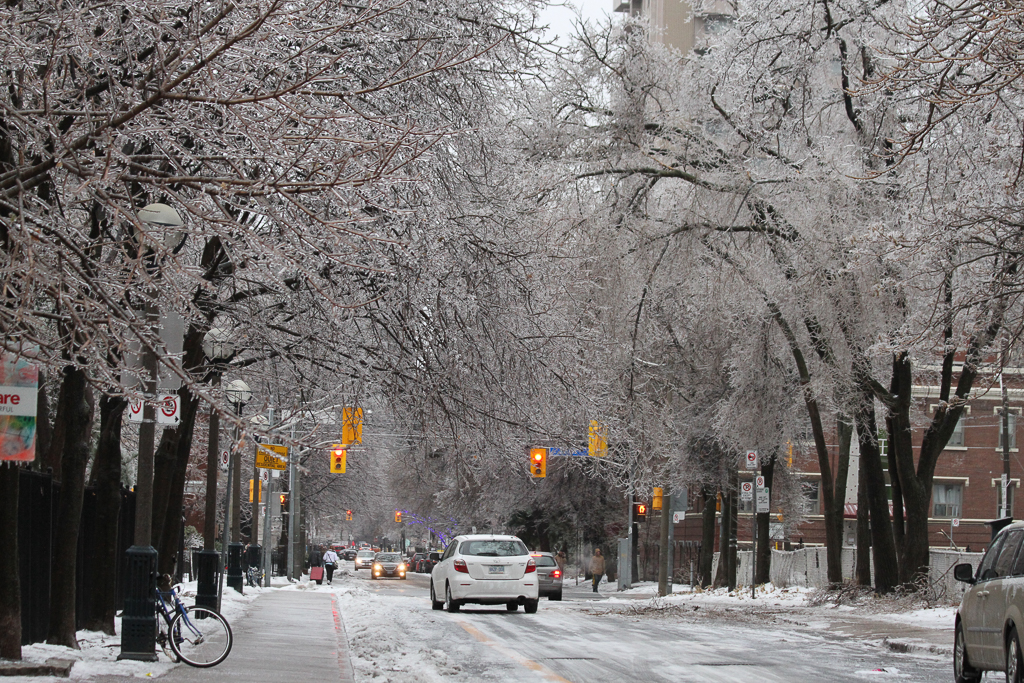
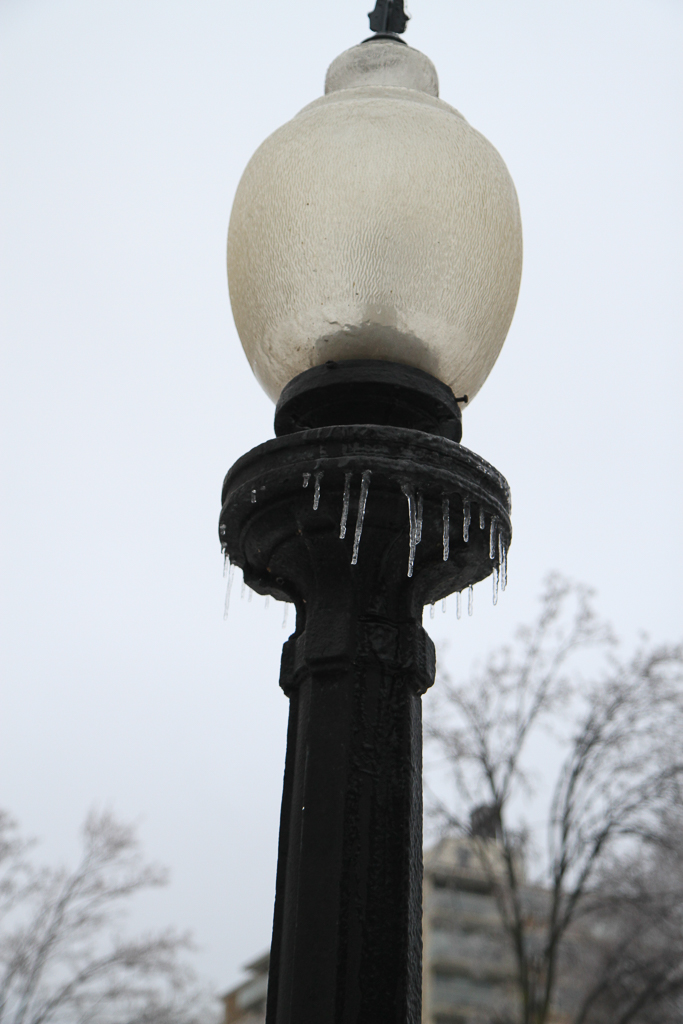
All this inclement weather lately has put me in mind of the infamous Toronto ice storm in late December 2013. This happened 11 years ago now, so I guess it qualifies for one of my so-called From The Vaults posts (i.e. Toronto events and photos from several years past).

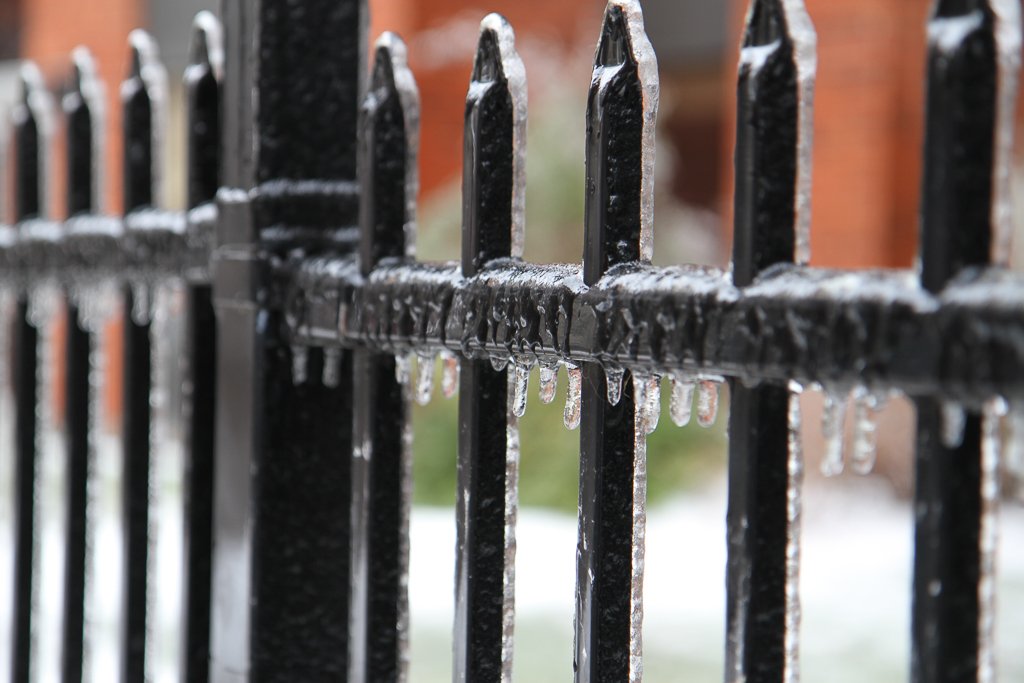
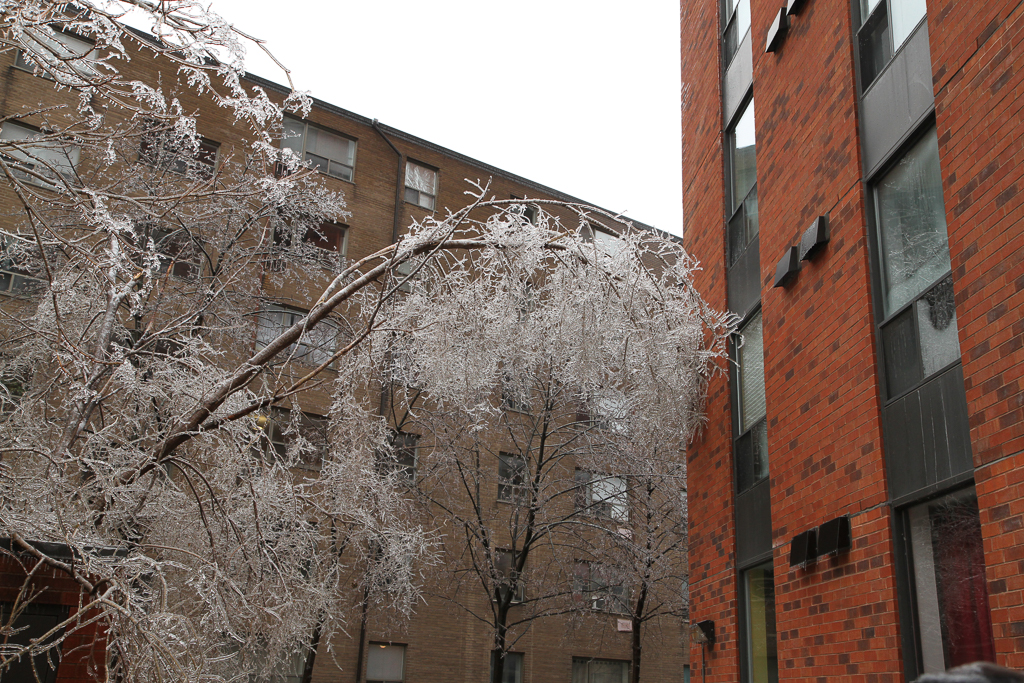
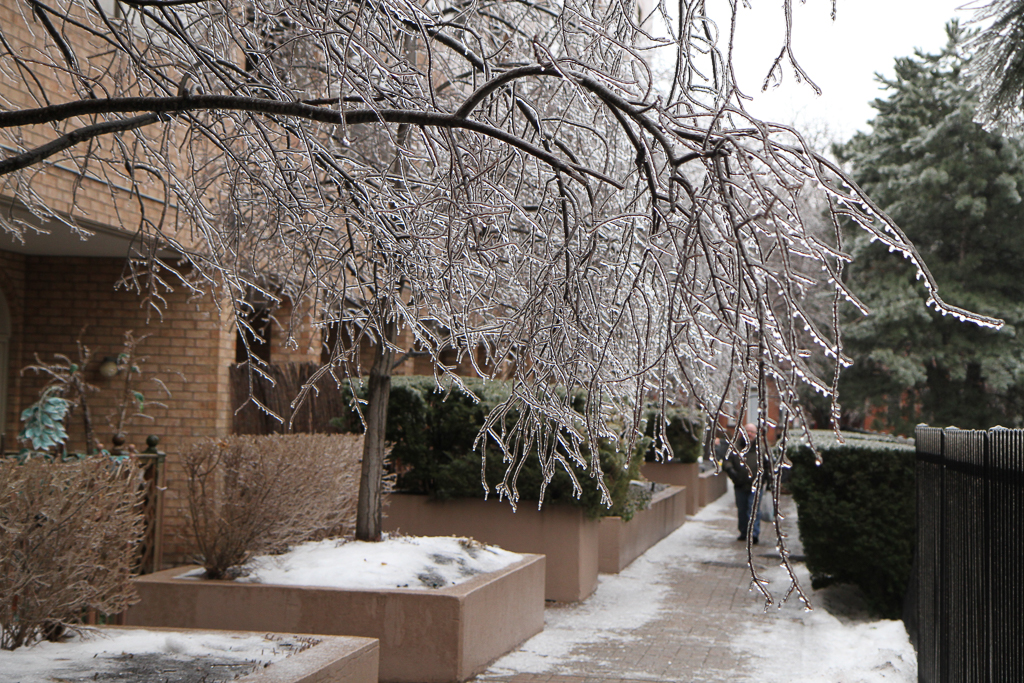
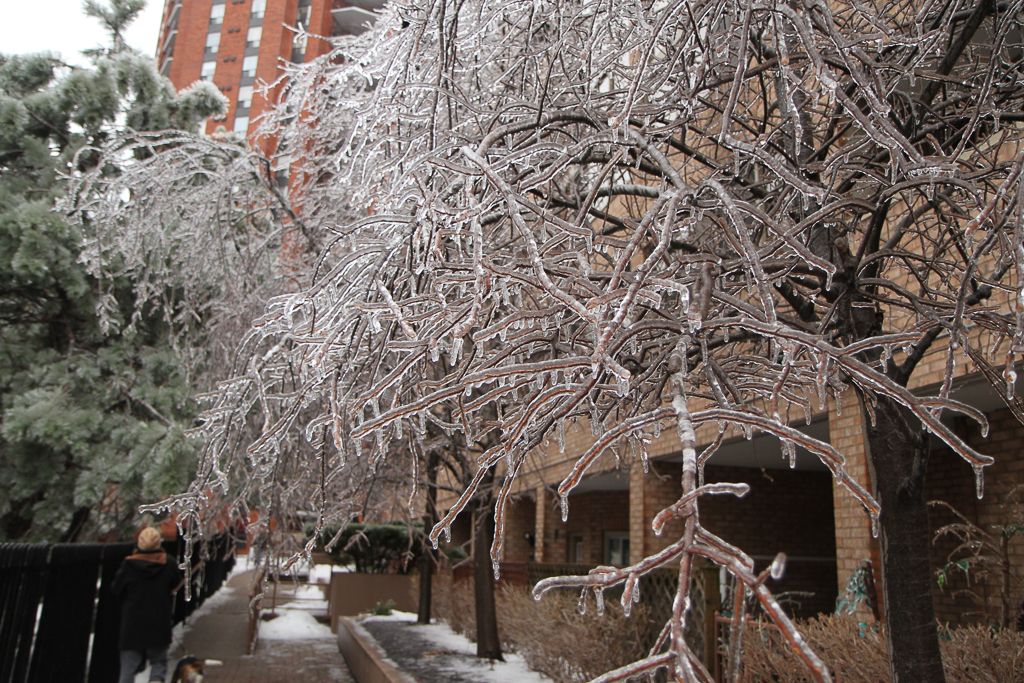
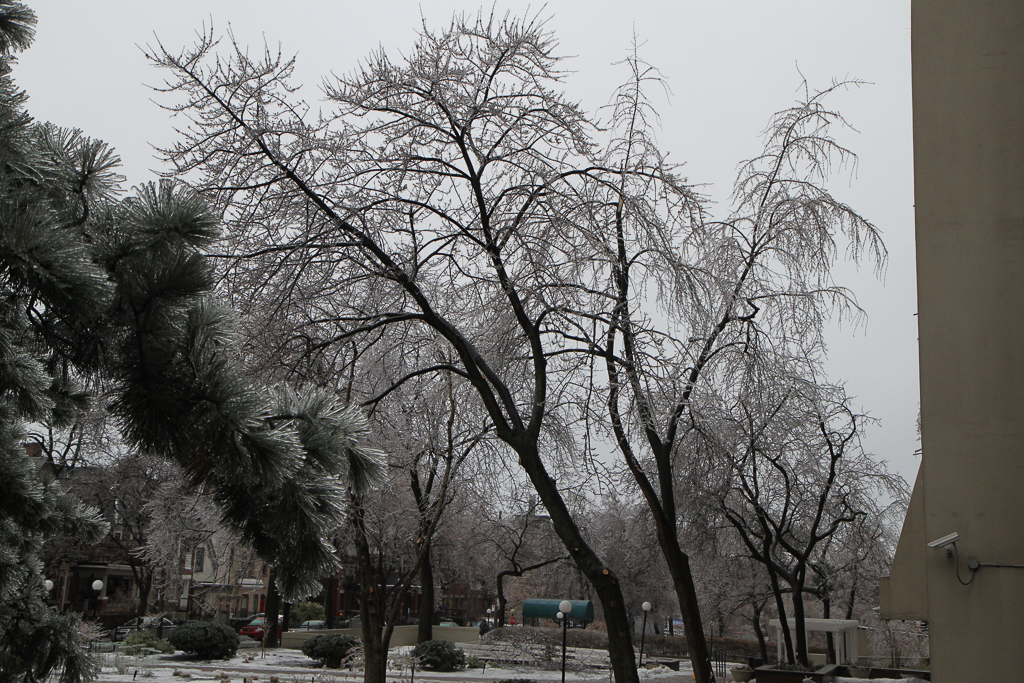
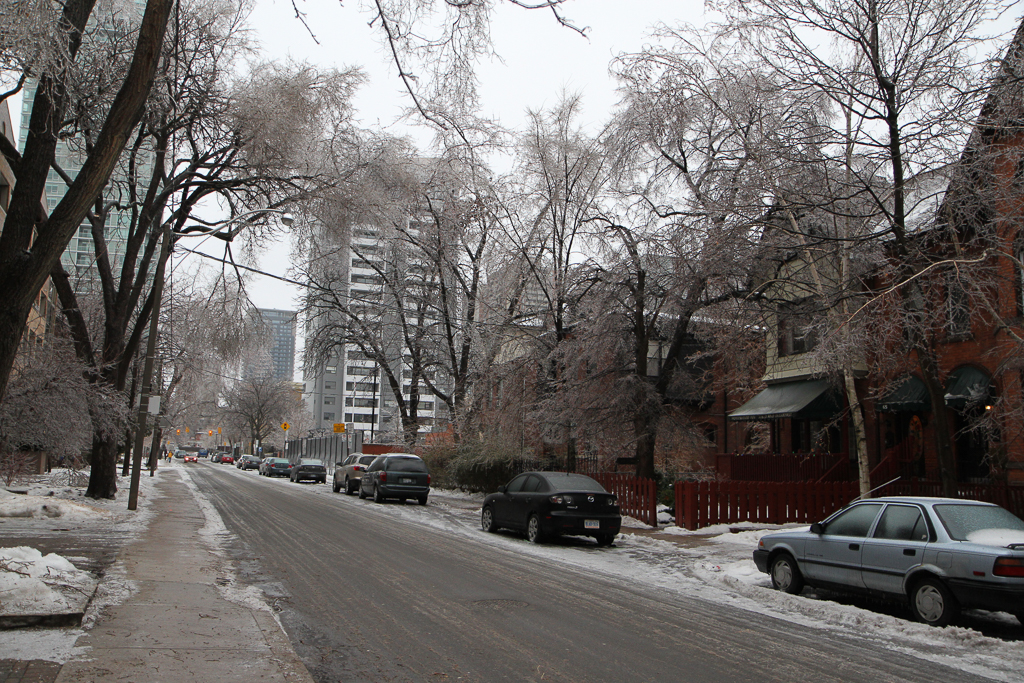
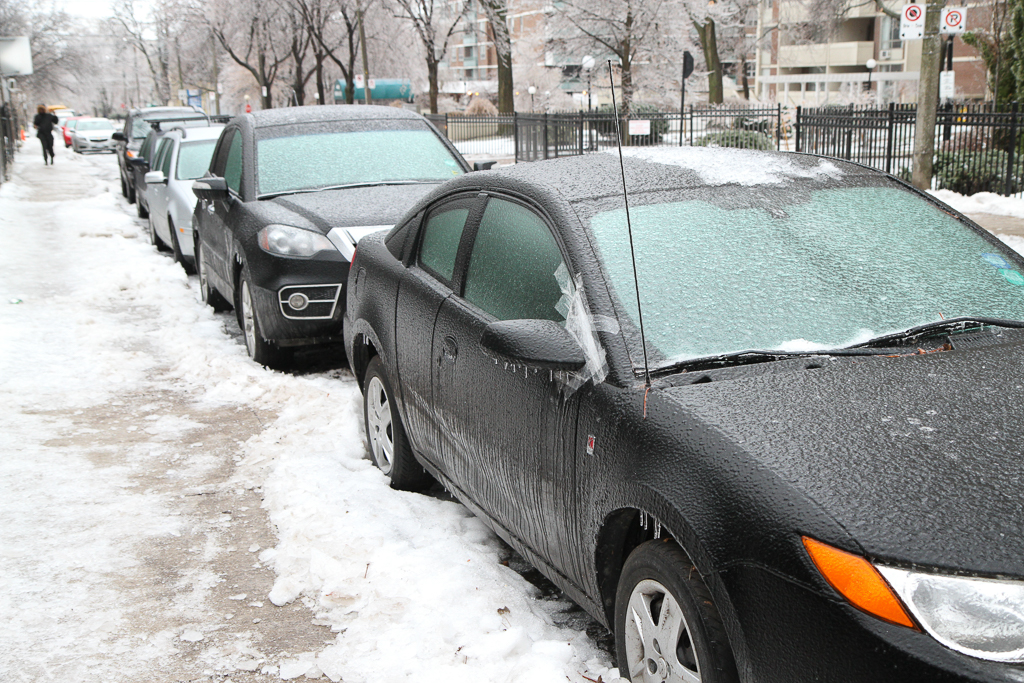
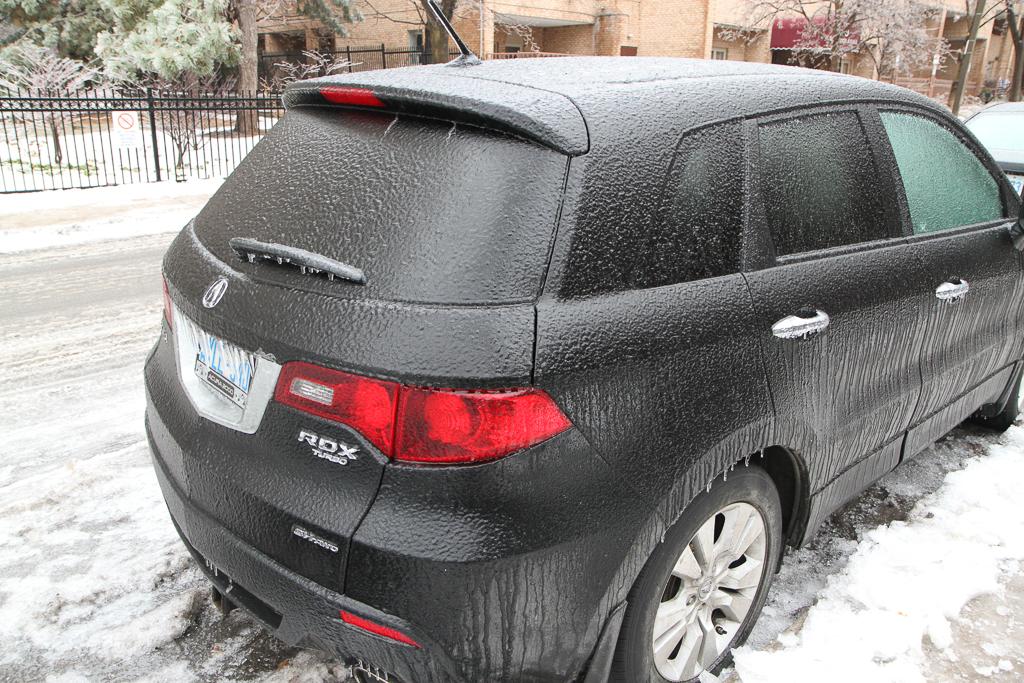
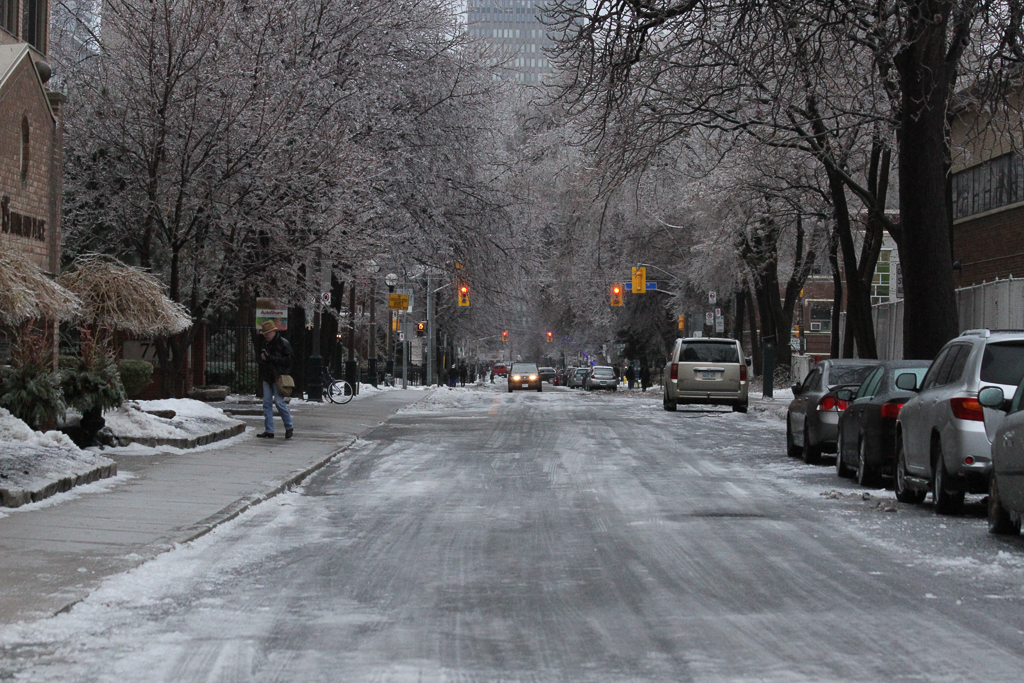
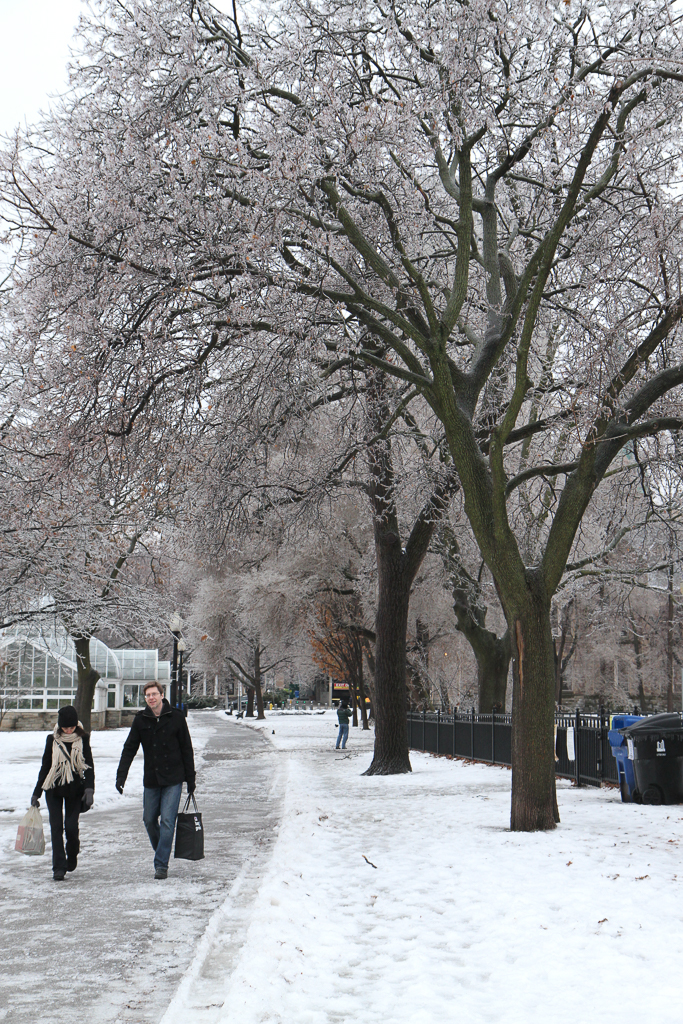
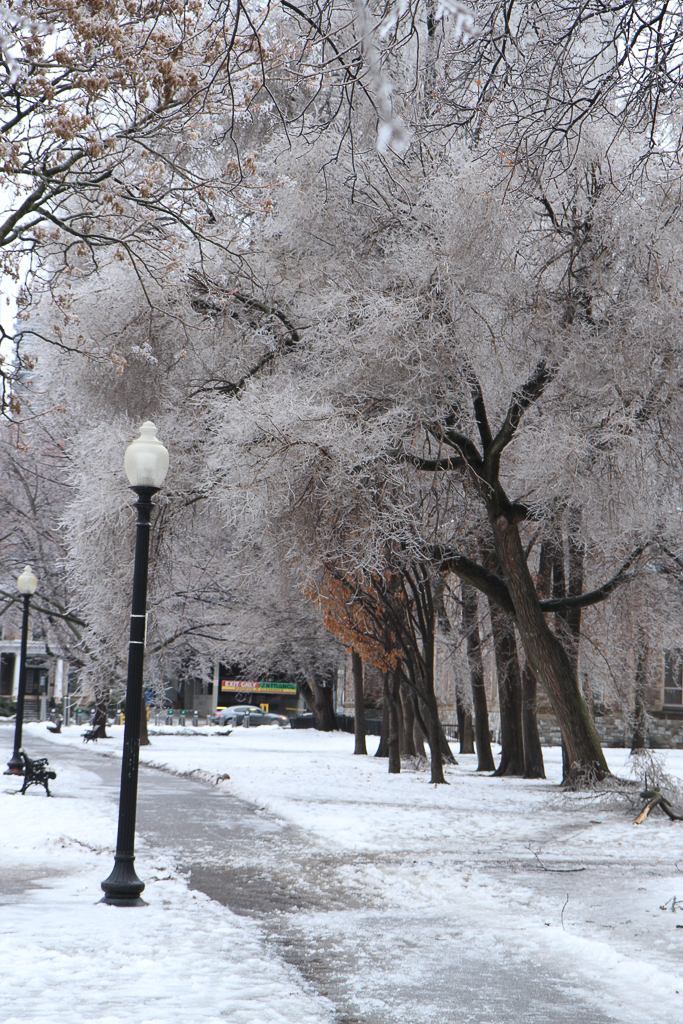
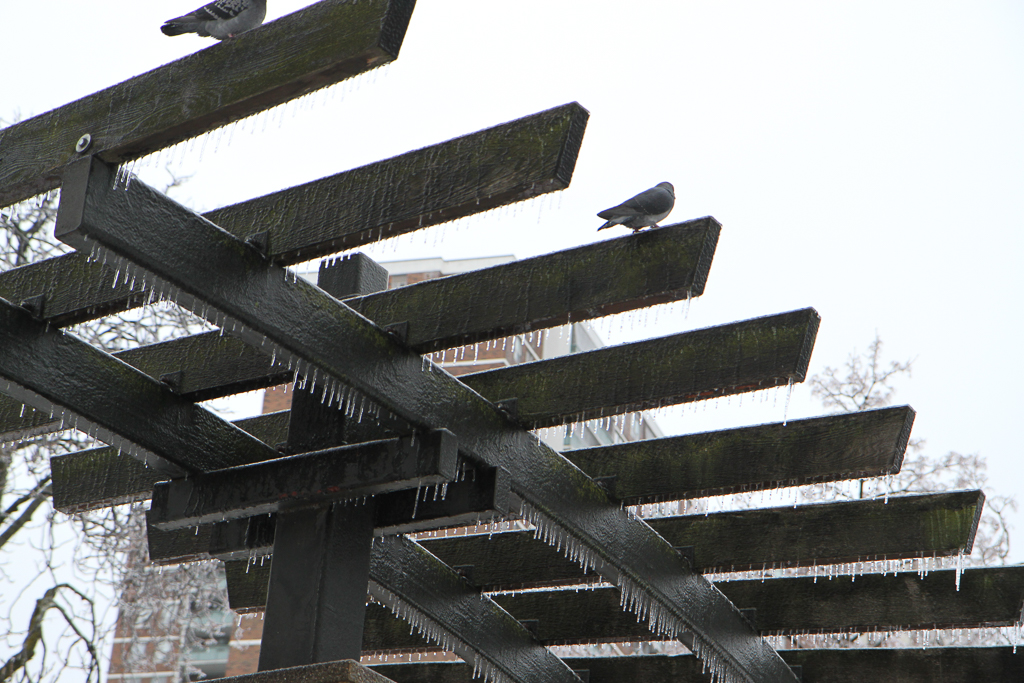
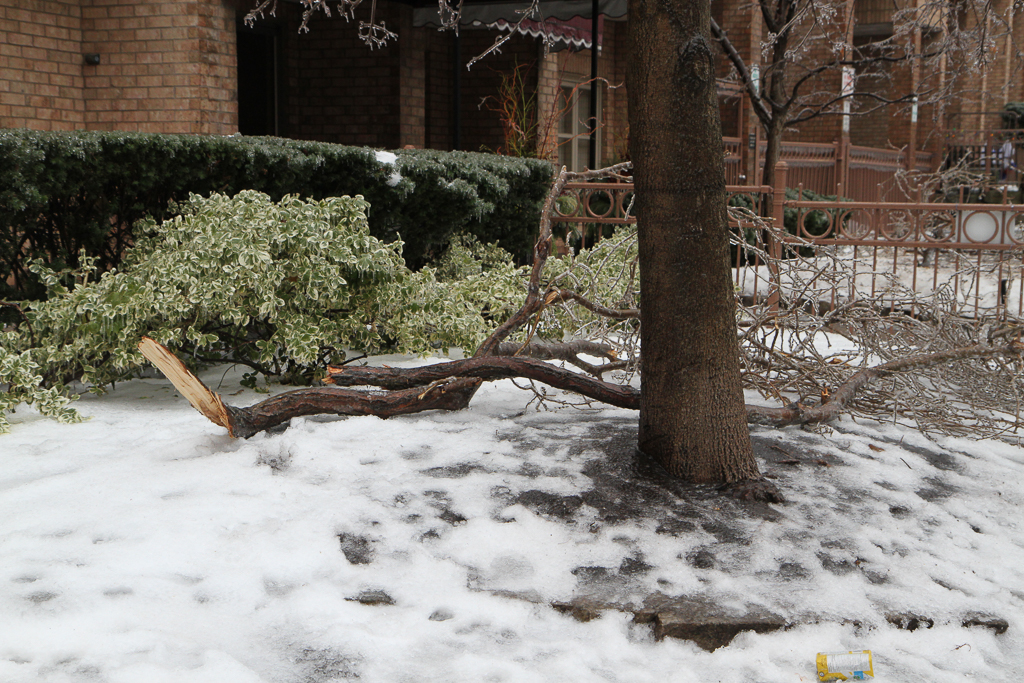
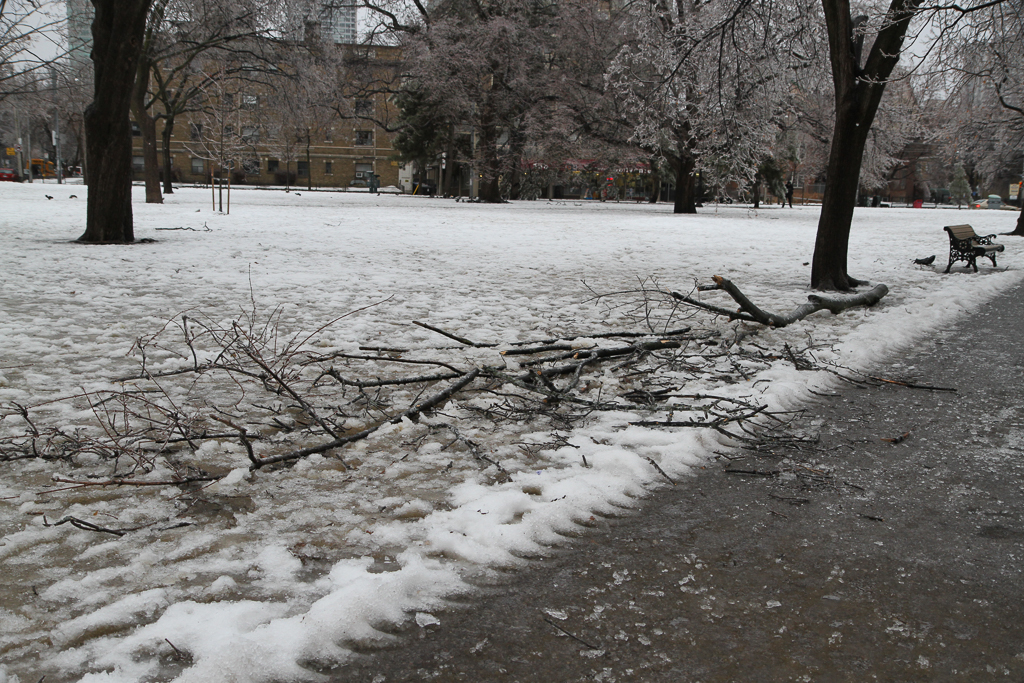
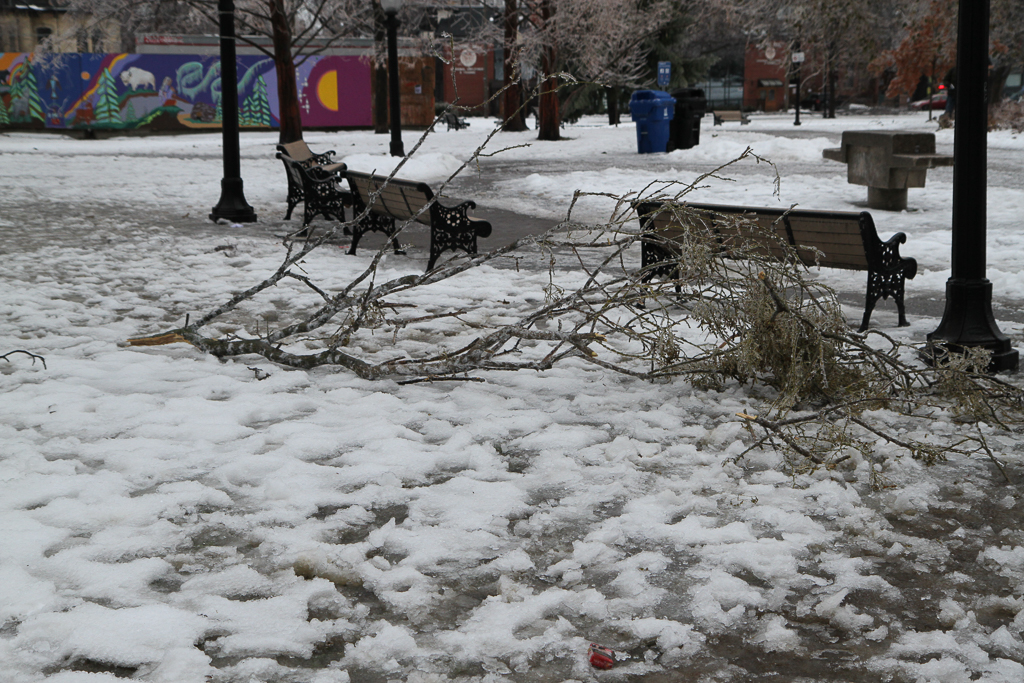
At the time of the storm I took a little walk around the neighbourhood to see everything more or less encased in ice:

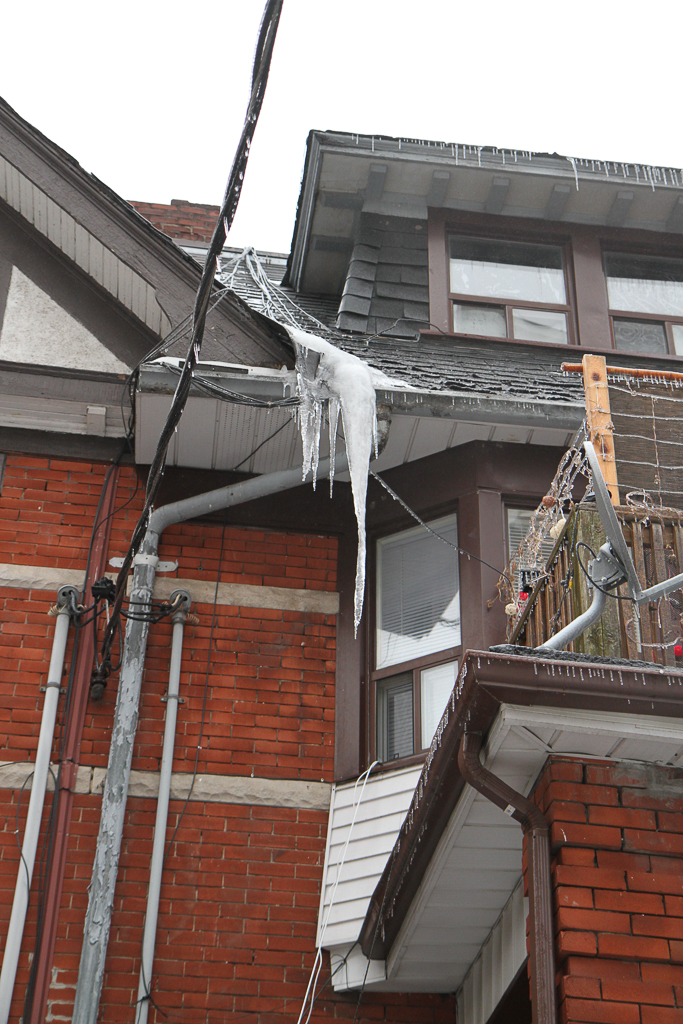
The massive ice storm began on December 19, 2013 and dispersed on December 23, 2013. In addition to hitting Ontario the storm also reached Quebec, Atlantic Canada, Maine, New England, New York, Michigan and even Arkansas. In Toronto, the ice was so heavy it resulted in damaged hydro lines and trees weighing down onto roads and vehicles.

The 2013 ice storm consisted of 40-plus hours of freezing rain and more than 30 millimetres of ice, leaving 416,000 customers without power, 500 wires down and two million trees damaged. During the ice storm, Toronto Hydro said 73,000 metres of service wire and 80,000 pieces of hardware had to be replaced. The storm had a total cost of $200 million.1

The storm killed 27 people, particularly from carbon monoxide poisoning in enclosed and poorly ventilated areas as people attempted to keep warm and cook with gas generators and charcoal stoves.

Streets And Cars Were Shrouded In Ice…

An Icy Allan Gardens

Lots Of Broken Trees…

At the time I remember thinking how weird everything felt; the city had mostly came to a halt throughout the storm. The ice storm of 2013 remains yet another Toronto vignette I will never forget.

1 Stats courtesy of The Weather Network

Love Park

Earlier this year a new park opened in downtown Toronto. Dubbed Love Park, it is located at the southern foot of York Street and Queens Quay (96 Queen’s Quay West, to be exact). The 2-acre park responds to the need for flexible public space in the southern Financial District and Harbourfront neighbourhood.

Talk about making ugly turn beautiful: the former use of this space was the York-Bay-Yonge eastbound off-ramp of the Gardiner Expressway. During 2016-17, the ramp was removed and the space reclaimed for public use.

The project timeline went something like this:

  • June 2020: Design
  • July 2021: Construction starts
  • Spring 2023: Construction complete
  • June 23, 2023: Park opens with ribbon-cutting ceremony and community celebration

Here’s how Love Park looks from above:

Disclaimer: Not my image

Love Park is a deliberate departure from the hard surfaces dominating downtown Toronto, with healthy existing mature trees retained and dozens of new trees being planted. Tree-lined sidewalks outline the entire perimeter and internal pathways of the park site, marking the transition into a calm urban refuge. Rolling elevated grassy mounds provide further buffer from the adjacent roadways and offer space to relax and enjoy the park at different vantage points.

Love Park’s pond was designed and built as a natural pond, which mimics a wetland and uses a natural water filtration system, not chlorine. Foggy pond water with a green hue can occur for a few weeks while the water system balances its water chemistry. The pond water remains safe and is monitored and maintained as required. The changing water hue and clarity can be affected by fluctuating water temperatures, rainwater, sun and shade.

Plenty of little critters around the park…

If you’d like to learn more about the creation of Love Park, click here to go to the architect’s website, Claude Cormier & Associés.

Milkman’s Lane

This post is sort of a companion piece to my last post on Craigleigh Gardens. The quiet and scenic urban trail known as Milkman’s Lane is located off South Drive in Rosedale, next to Craigleigh Gardens.

Though short and steep, the trail connects with the Beltline Trail which leads to the nearby Evergreen Brick Works, Moore Park Ravine and the Lower Don trail system.

Seen on historic maps since at least 1890, the abandoned roadway is 130 years old. It’s been said the pathway was originally intended for mostly commercial transport including, presumably, deliveries of milk.

It’s now a beautiful dirt pathway bordered in by wooden fences and plunging hills on either side as you’re led further into the ravine system. It’s primarily frequented by cyclists, hikers and dog walkers.

The lush vegetation includes black cherry, hemlock, yellow birch, ironwood, the endangered butternut, oak and maple trees.

If you keep following the Park Road Reservation Trail west at the bottom of the ravine, you’ll be offered up pretty views of Yellow Creek as it flows by.

Reference: BlogTO

« Older posts Newer posts »

© 2026 TO Cityscapes

Theme by Anders NorenUp ↑

Subscribe to TO Cityscapes

Subscribe to TO Cityscapes

Join my mailing list to receive an email alert when I publish a new post.

You have successfully subscribed! Check your email for further info.