
The last time I walked down The Esplanade, I was struck by how many new condos have sprung up in that neighbourhood. I thought it may be interesting to put together a little photo journal of the structures I encountered that day.


Toronto Through My Lens
The last time I walked down The Esplanade, I was struck by how many new condos have sprung up in that neighbourhood. I thought it may be interesting to put together a little photo journal of the structures I encountered that day.
The Annex is one of Toronto’s oldest neighbourhoods. It has an old world feel to it and is somewhat diverse, including U of T, trendy eateries, art galleries and one-of-a-kind shops. On its side-streets are gorgeous residential homes — many built around 1880.
For this walk I started at Bay Street, crossed Scollard Street, went down Hazelton Avenue, then on to Yorkville Avenue. From there I completed the rectangular route of Avenue Road, Prince Arthur Avenue, Huron Street, Lowther Avenue, returning to Avenue Road.

Let’s start out with some beautiful spring tulips on Scollard Street:


At 120 Scollard Street there is this absolutely delightful sculpture called Table of Love by the artists Gillie & Marc.
The text accompanying the work reads:
Even though it was their first date he asked her to marry him. And she said YES. They say when you know, you know, and Dogman and Rabbitwoman both did after just one date. They met, they had dinner, he asked, she said yes. And within a week of first meeting each other they were in Nepal getting married in the foothills of Mount Everest. They still love going on dates together, sharing food, laughter and conversation. And after all this time – to adventure, to chance, to each other – they always say yes.


Outside Gallery Gevik at 12 Hazelton Avenue I encountered The Chorus, a 1966 sculpture by the Canadian artist Sylvia Lefkovitz:


I’ve always thought this sculpture dark, depressing, foreboding; it fills me with a sense of dread, à la the Dementors in the Harry Potter movies…
Time to move on to something a little cheerier…
Prince Arthur Avenue was named for the Duke of Connaught (1850-1942) who became Governor-General of Canada from 1911 to 1916. He first visited Canada in 1869 and this street name appeared on the Toronto registered plan in 1870.
I’ve been wanting to revisit Prince Arthur Avenue for a while. I’ve always admired the historic homes and buildings on this relatively upscale street:


If you’d like to read my post dedicated to Uno Prii’s architectural creations in the Annex, click here.


Construction of permanent dwellings began on Lowther Avenue around 1875, and shifted to the semi-detached houses that are so characteristic of the 1880s.


Returning to my starting place of Avenue Road, I noticed this intriguing sculpture entitled Figure Catching a Fly by David Altmejd (2019).
Made of bronze, the sculpture sits in front of the Yorkville Private Estates at 200 Cumberland Street; the front of the sculpture faces Avenue Road.


“Altmejd’s bronze statue, standing more than eight feet in height, fancifully updates the traditional bronze figurative monument. Clad in billowing, flowing robes, the sculpture’s striding female figure arrives like a deity, simultaneously gesturing downward to earth and skyward triumphantly. With arresting appeal, Almejd’s animated bronze figure conjures the history of the Yorkville neighbourhood that in the 1960s became Toronto’s epicenter of fashion, fine art, and nightlife, signalling the city’s sophistication and cultural aspirations.” – storeys.com
That’s it for today! Thanks for joining me on this mini-tour of Toronto’s Yorkville-Annex neighbourhood.
References:
Old Toronto Houses by Tom Cruickshank
storeys.com
waymarking.com
In my previous post on Beaty Boulevard Parkette I mentioned nearby Budapest Park, located at 1575 Lakeshore Boulevard West. Beaty Boulevard Parkette is located at the busy junction of Queen Street West, King Street West and Roncesvalles Avenue. From the Parkette, you can cross the Pedestrian Bridge spanning the Gardiner Expressway and Lakeshore Boulevard West, and wind up in Budapest Park.

Budapest Park was created in remembrance of the fallen freedom fighters of Hungary who fought against the rule of the then-Soviet Union. The Park is located on the shore of Lake Ontario, to the east of Sunnyside and the Gus Ryder Pool. Facilities at Budapest Park include beach access, bike trails, drinking fountains, field houses, outdoor fitness equipment, a playground and splash pad, a parking lot and washroom facilities.
It was early spring when I visited, so the greenery was just in the very early stages of popping out.


The Freedom for Hungary monument in Budapest Park was designed by Victor Tolgesy and erected in 1966. The monument commemorates the 10th anniversary of the Hungarian Revolution and Freedom Fight of 1956.


Using a filter and utilizing some moody street lighting, my intent was to emulate – if possible – those wonderful, grainy old 1940s/50s night images of a large urban centre in the wee hours.
I captured these images a few weeks ago when walking in the Yonge-Dundas area:


I love Roncesvalles (aka Little Poland) – it has such a welcoming village-feel to it and exudes a laid-back yet slightly hip vibe. Roncesvalles Avenue itself stretches for 1.8 km, and is filled with gardens and charming, independent shops along the way. About 15,000 people live in Roncesvalles Village’s vintage buildings.
Known as “Roncy” to the locals, Roncesvalles consists of the stretch of Roncesvalles Avenue from Bloor Street south to Queen Street West.


Roncesvalles Avenue was originally owned by Colonel Walter O’Hara who named the street after the Roncesvalles gorge in Spain, where he had won a battle against Napolean’s army circa 1813. British settlers began to arrive in the early 1900’s as residential homes appeared. After WWII large numbers of Polish immigrants arrived and set up all sorts of businesses; that is why this neighbourhood celebrates the Roncesvalles Village Polish Festival every year.
Culturally, the area is known as the centre of the Polish community in Toronto with prominent Polish institutions, businesses and St. Casimir’s Catholic Church located on Roncesvalles Avenue. The businesses along Roncesvalles have formed the Roncesvalles Village Business Improvement Area and hold the largest Polish Festival in North America, which takes place every September.


Roncesvalles is very well known for the large number of small restaurants, cafés and specialty food shops of various cuisines. There are several bakeries and delicatessens found along the full length of Roncesvalles.


I’ll leave you with a couple of sites to explore it you’d like to learn more about Roncesvalles:
From Destination Toronto:
An excellent post on their website
Roncesvalles BIA:
Local info found here
Yesterday I thought I might go to Chinatown to shoot the events of the Lunar New Year celebrations at Dundas Steet West and Spadina Avenue (it’s Year of the Dragon, by the way). When I got there I found the Dragon City Mall to be a little too packed for me, so I headed through Chinatown to see what other photo opportunities might present themselves.
Walking along Dundas Street West opposite the AGO, I spied Vincent van Gogh in front of the Mayberry Fine Art Gallery at 326 Dundas Street West:

One of the things that made this piece so compelling was its presentation in a three-dimensional perspective. van Gogh’s face is carved and embedded into the rest of the frame; unfortunately the effect doesn’t translate well in a photograph but is still impressive nonetheless.

I always love passing by the Mayberry Gallery as they consistently exhibit such interesting pieces street-side. This recent installment was promoting the Immersive van Gogh Exhibit at the Lighthouse ArtSpace Toronto, located at 1 Yonge Street. More info and tickets here. By all appearances it looks like a great exhibit.
I made a turn on to McCaul Street and headed north. One very short block north of Dundas Street West I encountered a laneway leading off McCaul Street:

I could see quite a bit of colour in the distance so I went further in to check things out… I wasn’t disappointed with my findings:


Walking further north up McCaul Street, I encountered another scenic laneway just south of Baldwin Street. This alleyway art was not quite as extensive as the previous lane, but interesting all the same.
Clearly, the artist was a Dr. Seuss fan:


The last mural before heading home:

This post was originally from a couple of weekends ago when the weather was not cooperating. I am reposting this one as I don’t believe it was published recently given all my trouble with my automated sender.
This post is one-part city walk mixed with two-parts photography experiment.
It’s a distant foggy memory, much like the weather we’ve had recently. Given that, I thought it would be interesting to take a walk in the fog/darkness and shoot in black and white to emphasize the moodiness.
I love shooting in black and white; it makes everything look so different and dramatic – details stand out, creating emotions. In addition to shooting in soft black and white I used a diffusion filter which removed much of the “digital edge” from modern digital cameras, leaving a soft B&W treatment looking like it was shot on film. The shots are intentionally dark and muted, and the fog enhanced the effect.


Located at 247 Yonge Street, across from the Eaton Centre, is OctoZone. OctoZone is a huge claw machine-themed gift shop. The interior is very Asian-styled, infused with copious amounts of bright turquoise and hot pink neon (the effect lost, of course, in my black and white shots). I’ve passed this place several times and have always wondered what it is; this time I decided to take temporary refuge from the fog and drizzle, go in and check it out. It’s quite an interesting place: click here if you’d like to watch a short YouTube video about OctoZone.


Next stop: home, where it’s warm and dry! 🙂
Renfrew Place sounds like a posh street but in actuality is a back alley. It’s located one block north of Queen Street West and runs between Simcoe Street and John Street:

An interesting and colourful segment of Renfrew Place is the small section between St. Patrick Street and McCaul Street, which is where I captured these images:
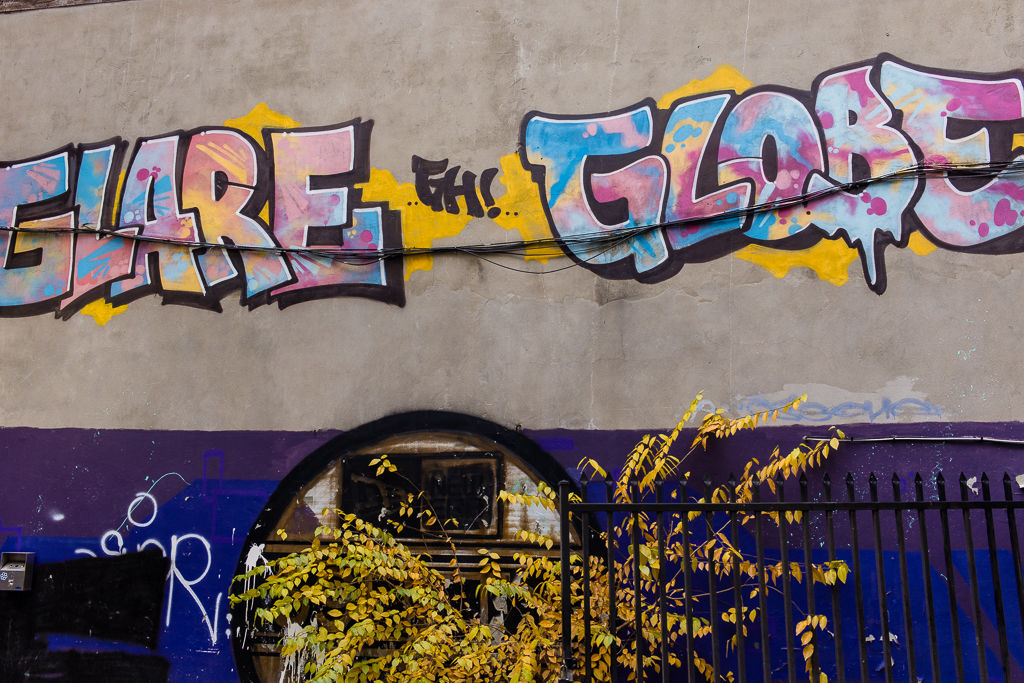


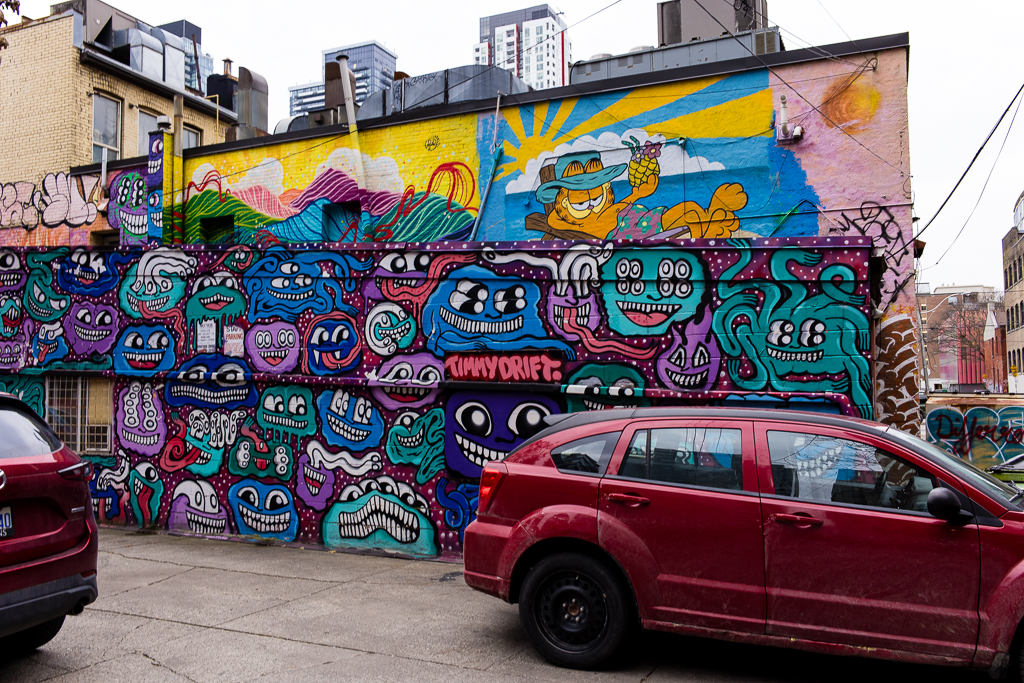
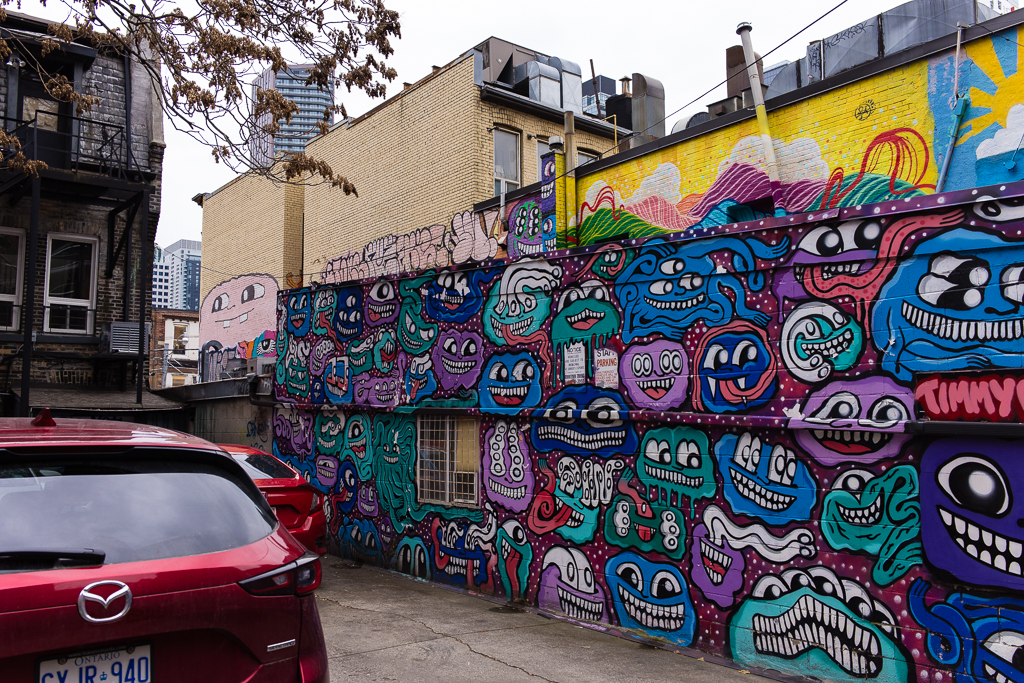
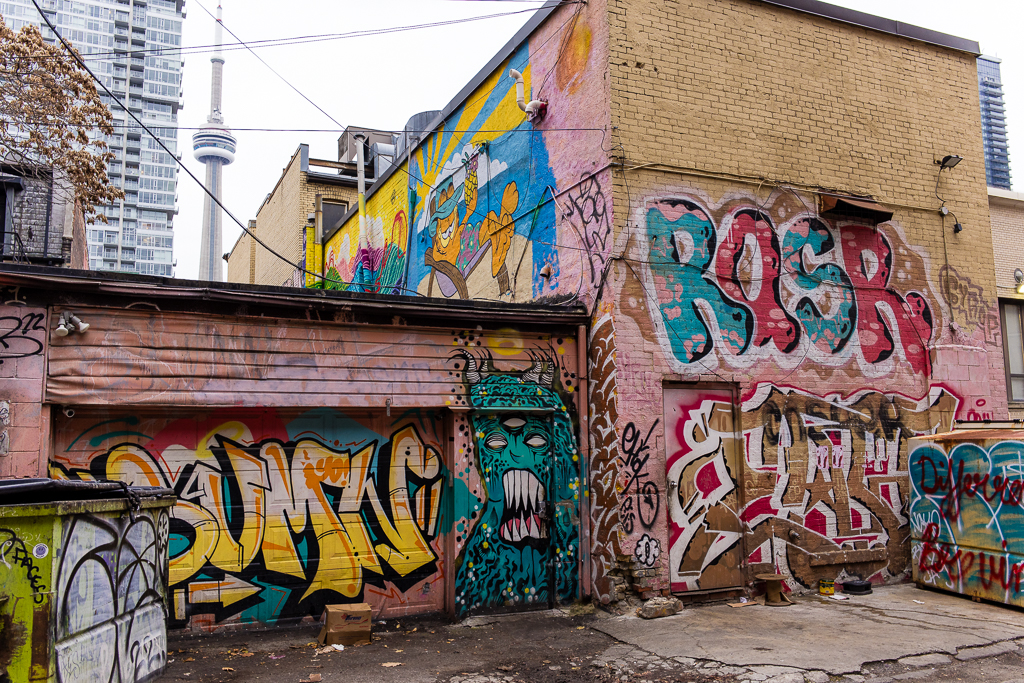
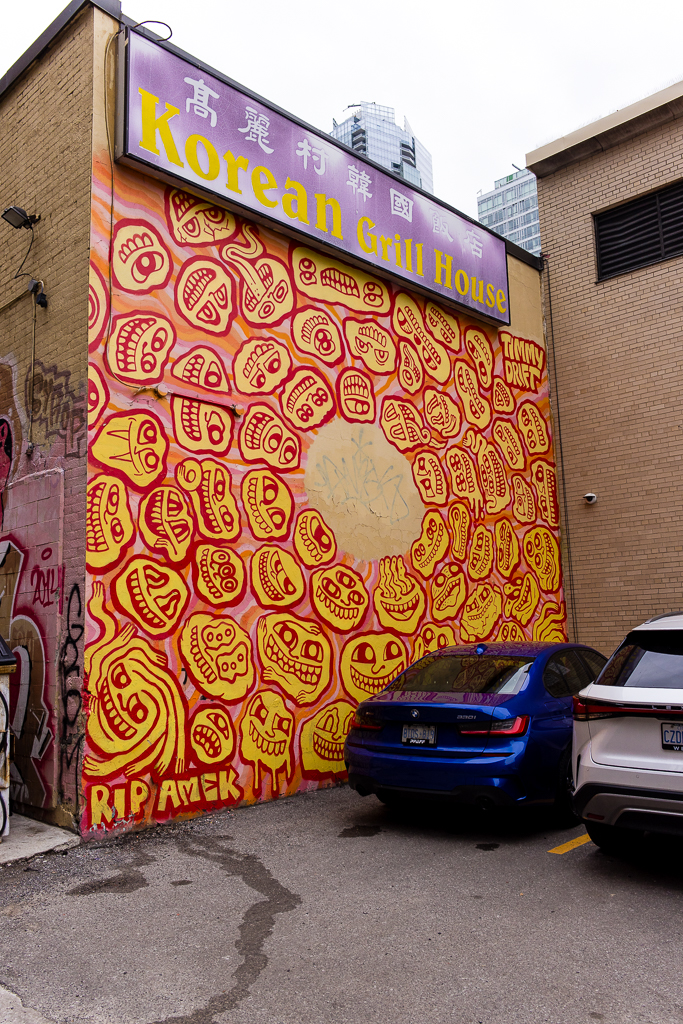
Crossing McCaul Street and moving toward John Street, the alley is a little bland at first but becomes more interesting and colourful as you progress further west:


As I moved further west down Renfrew Place I became aware that everything was bathed in this odd green light. The green glow in these shots is from the setting sun reflecting off the green exterior of the Umbra building on the corner of Renfrew Place and John Street. It was late afternoon when I took these shots, so the slowly setting sun was strong, illuminating everything in the alley and turning it green:


If you’ve been following TO Cityscapes for a while you’ll find the occasional post about the very talented Toronto street artist Elicser. I’m a big fan of his urban art. His style is instantly identifiable and his murals can be found in so many interesting spots in the city. I was pleased to find some more of the man’s work in this alley.
If you’re interested in reading some of my previous posts featuring Elicser’s mural art, please check out the posts below:

Barbara Barrett Lane is located just south of Bloor Street West, running between Brunswick Avenue…

Walking down Queen Street East this past weekend on my way to photograph Riverside, I…
I recently walked College Street from end to end; here’s some of the street art…
I call this street art site Apple Alley because of its location: the first alley…
I discovered this street art in an alley off King Street West, east of Strachan…
The colours of these Elicser murals may seem a little odd but, again, the alley was bathed in a strong reflected light from the Umbra building on John Street:


Renfrew Place terminates at John Street. Just before exiting the alley to John Street, a couple more Elicser murals can be found:


All this inclement weather lately has put me in mind of the infamous Toronto ice storm in late December 2013. This happened 11 years ago now, so I guess it qualifies for one of my so-called From The Vaults posts (i.e. Toronto events and photos from several years past).
At the time of the storm I took a little walk around the neighbourhood to see everything more or less encased in ice:
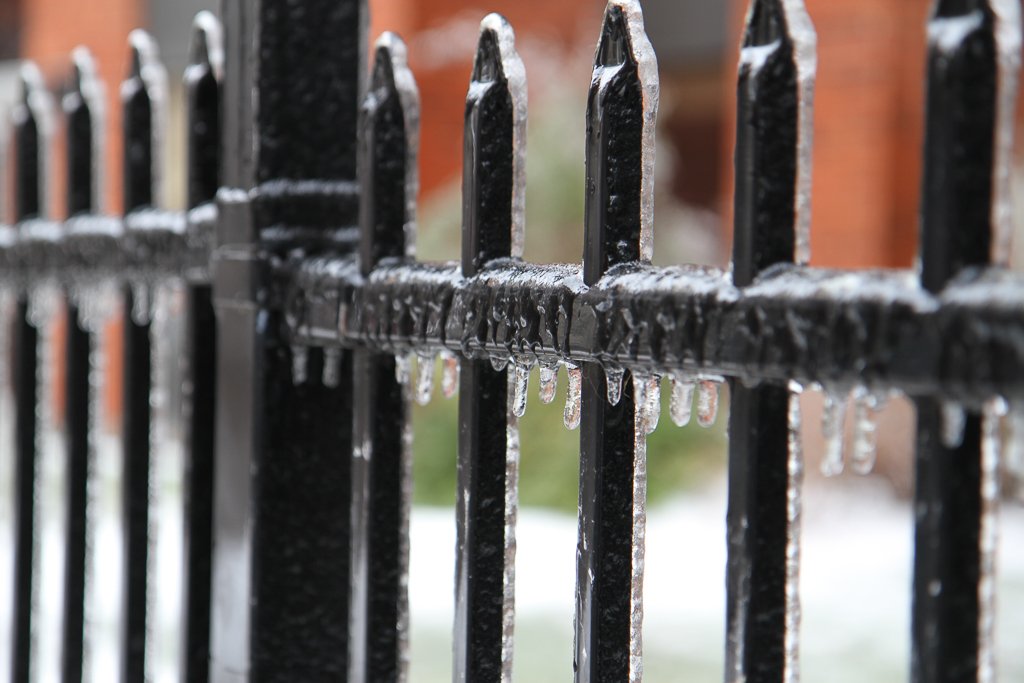
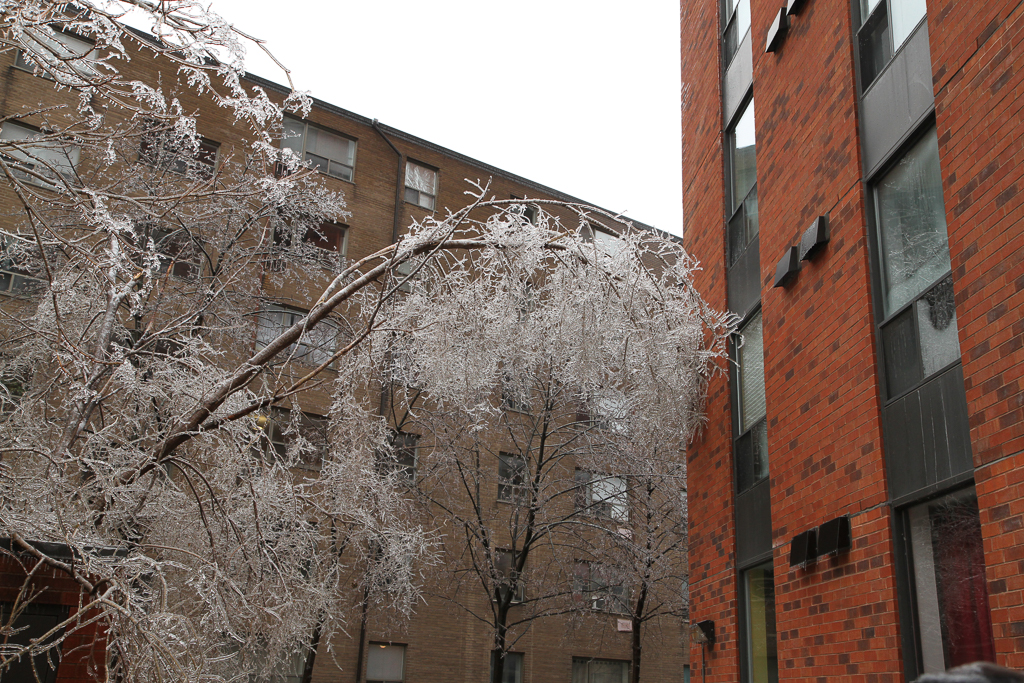
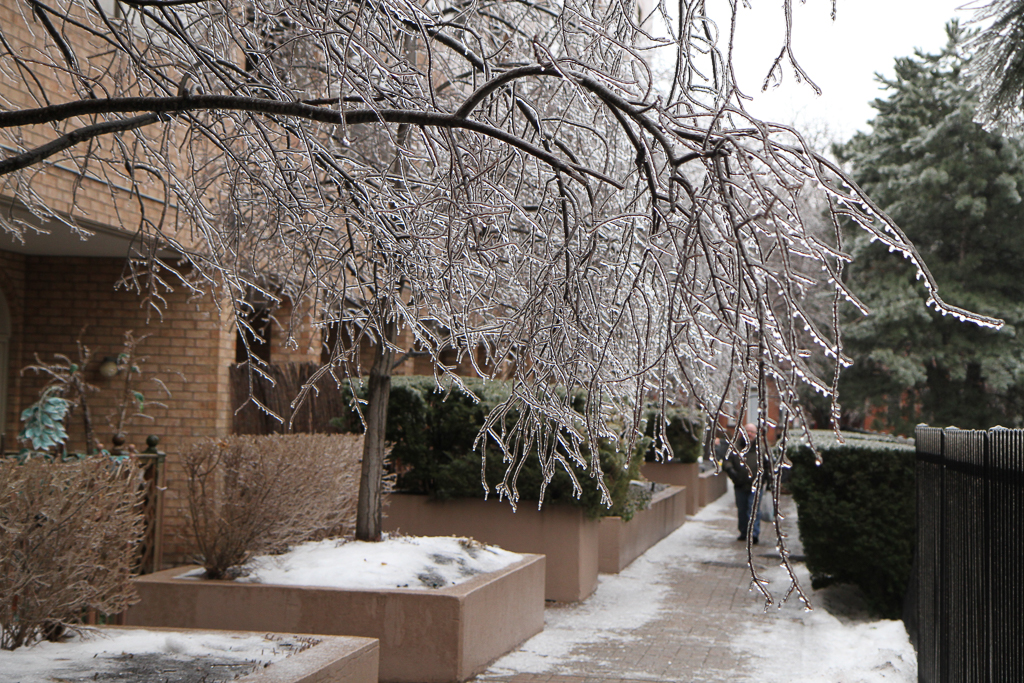
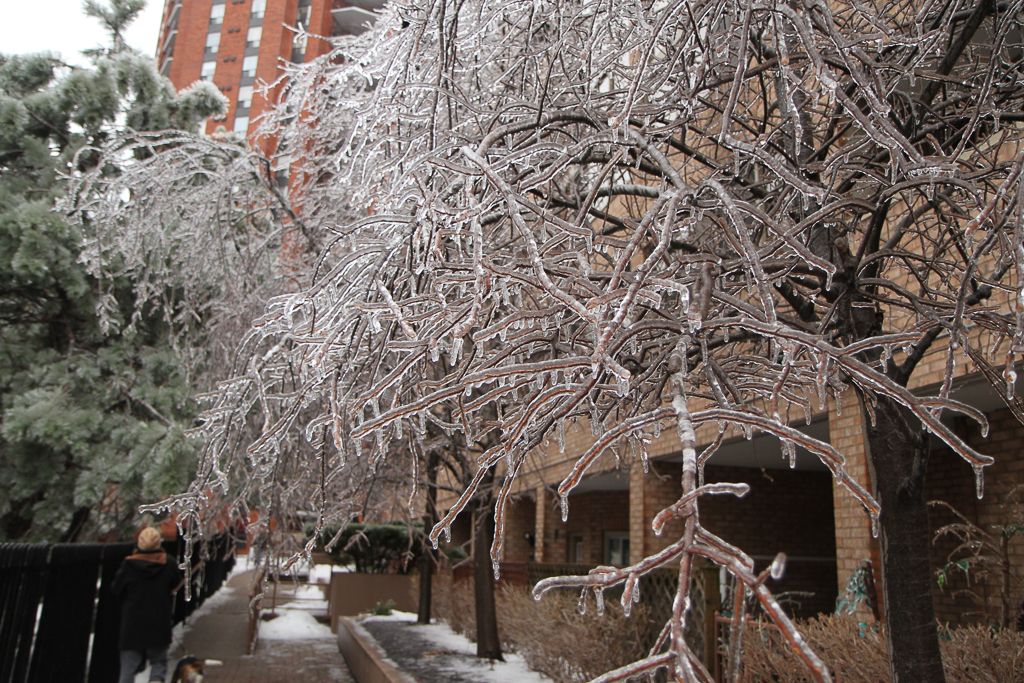
The massive ice storm began on December 19, 2013 and dispersed on December 23, 2013. In addition to hitting Ontario the storm also reached Quebec, Atlantic Canada, Maine, New England, New York, Michigan and even Arkansas. In Toronto, the ice was so heavy it resulted in damaged hydro lines and trees weighing down onto roads and vehicles.
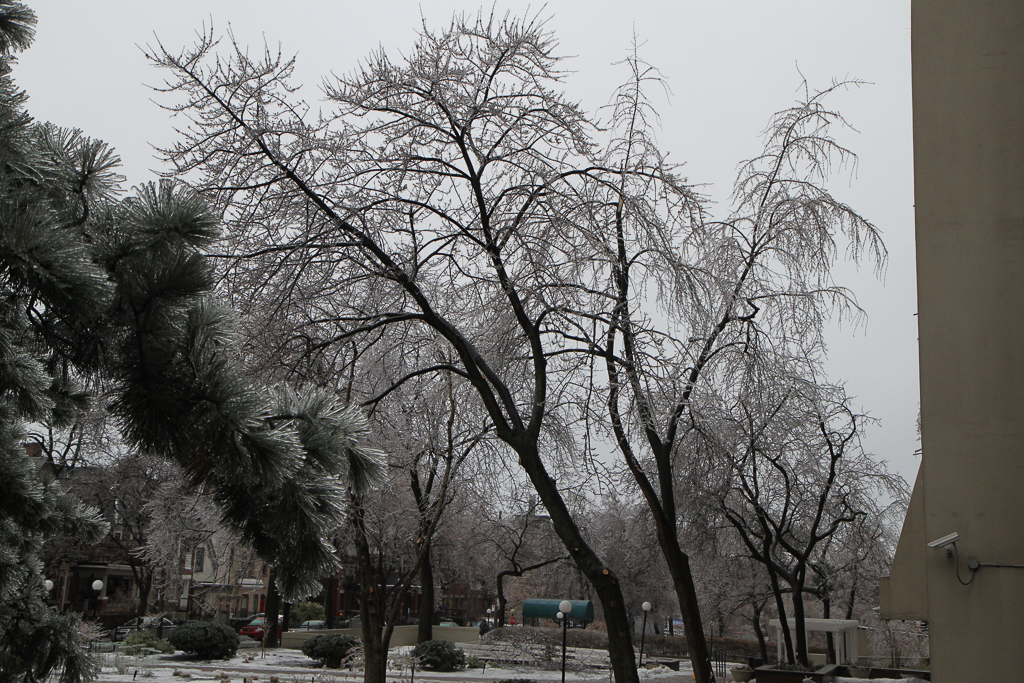

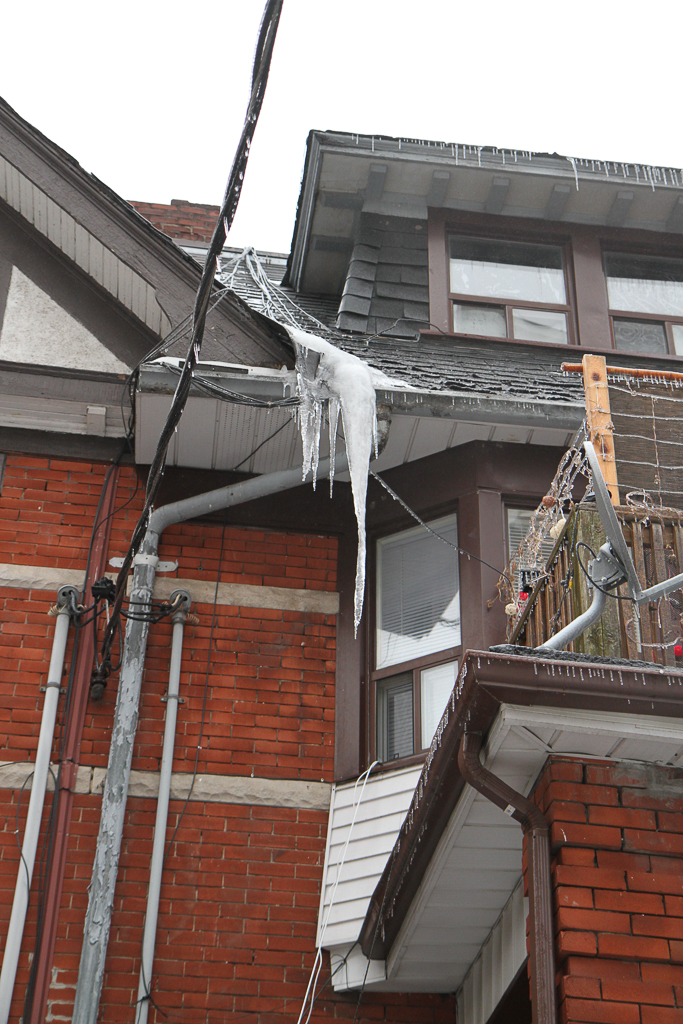


The 2013 ice storm consisted of 40-plus hours of freezing rain and more than 30 millimetres of ice, leaving 416,000 customers without power, 500 wires down and two million trees damaged. During the ice storm, Toronto Hydro said 73,000 metres of service wire and 80,000 pieces of hardware had to be replaced. The storm had a total cost of $200 million.1
The storm killed 27 people, particularly from carbon monoxide poisoning in enclosed and poorly ventilated areas as people attempted to keep warm and cook with gas generators and charcoal stoves.
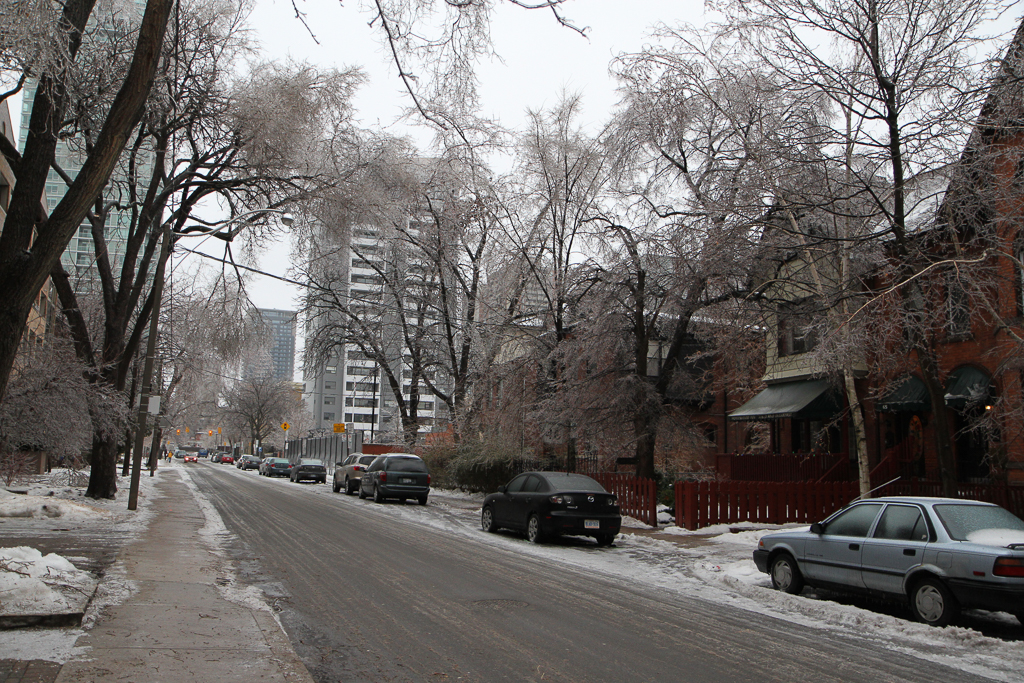

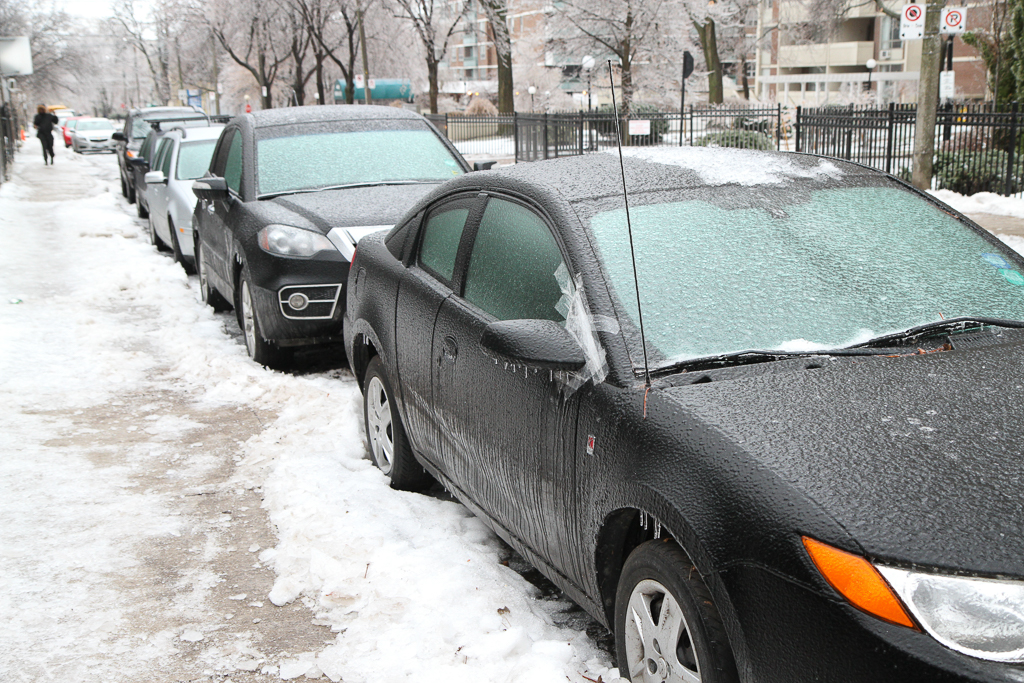
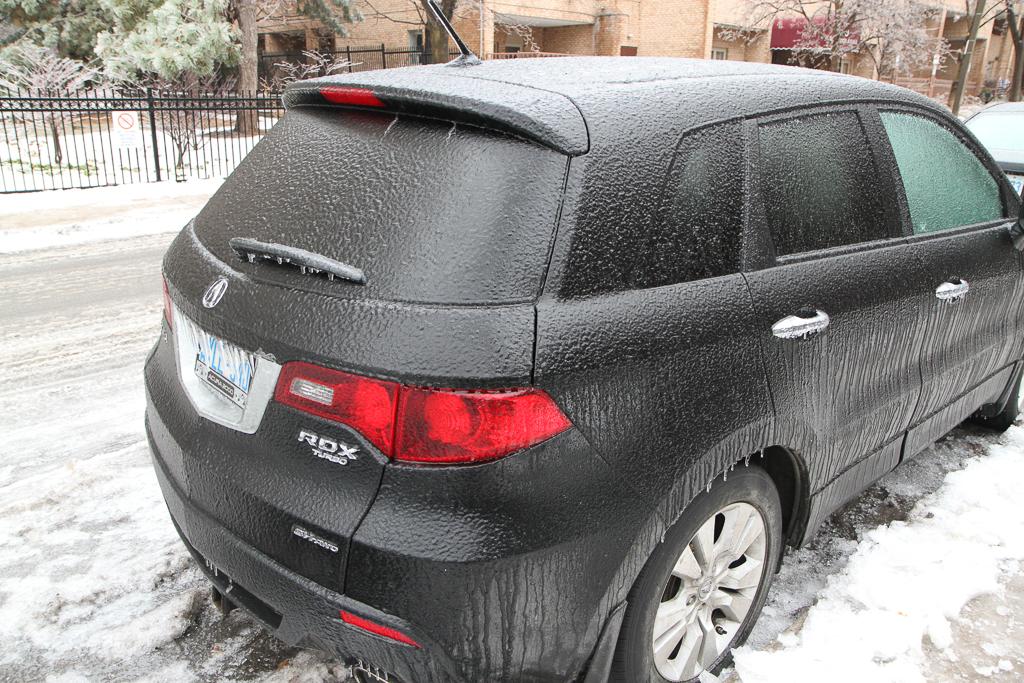
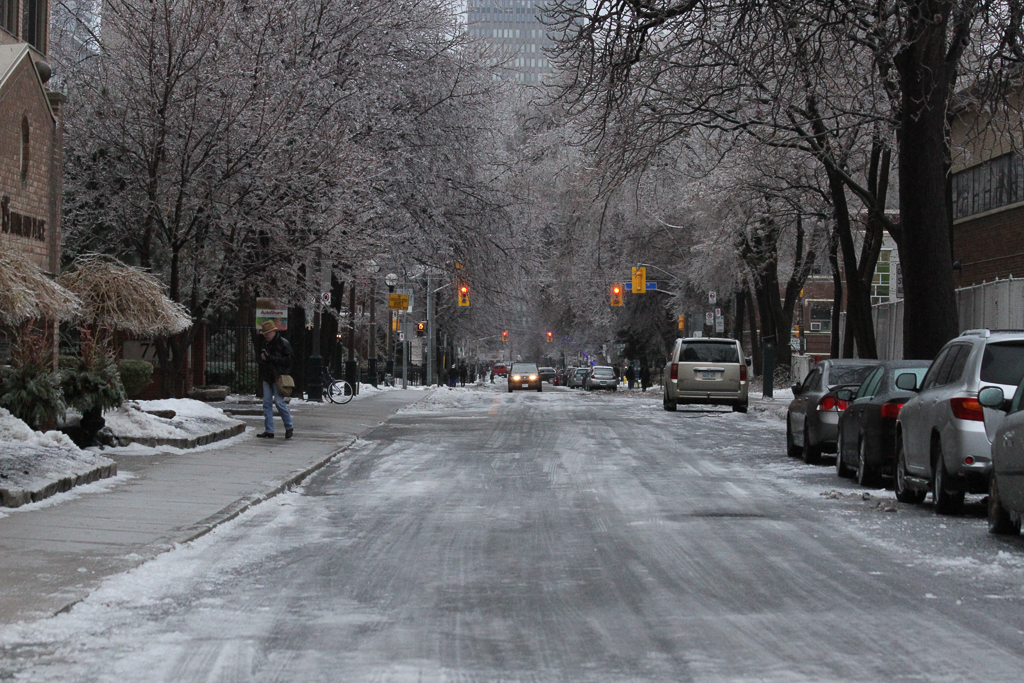
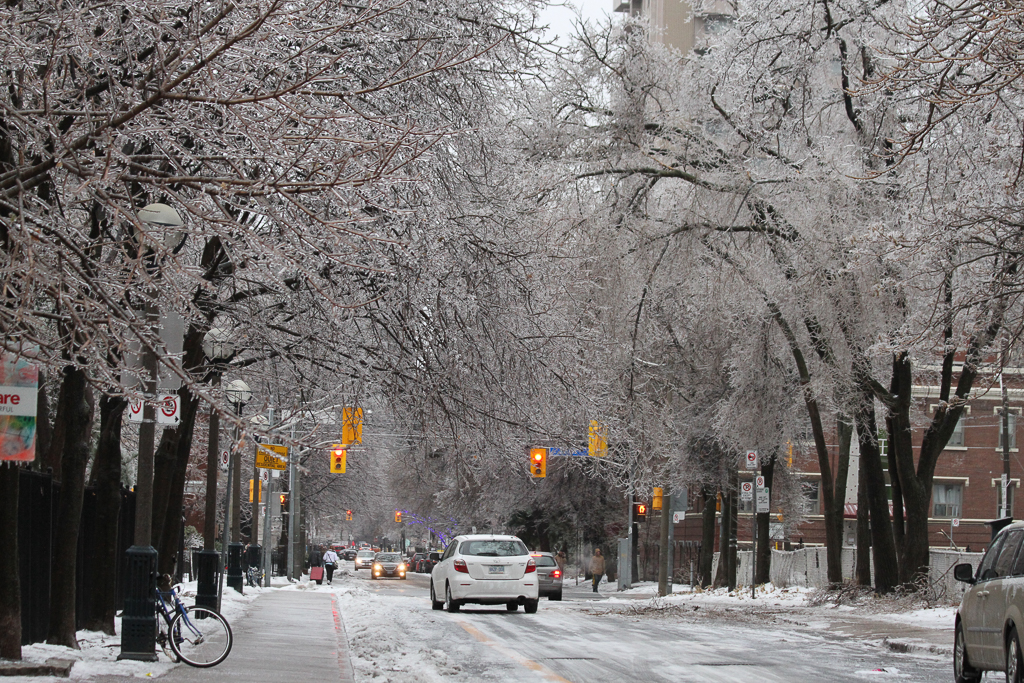
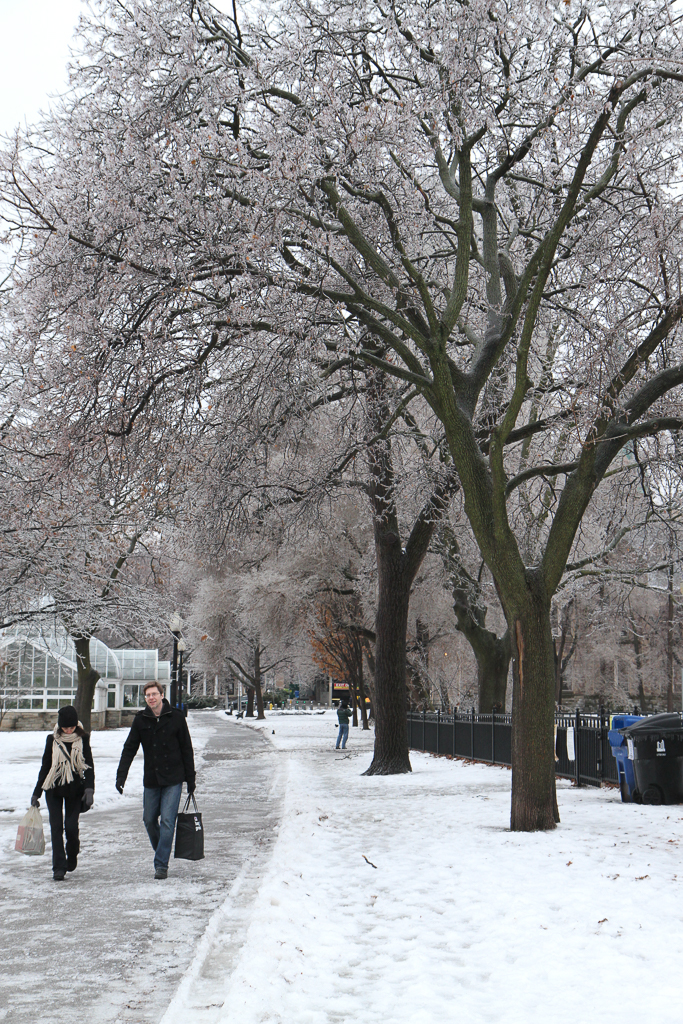

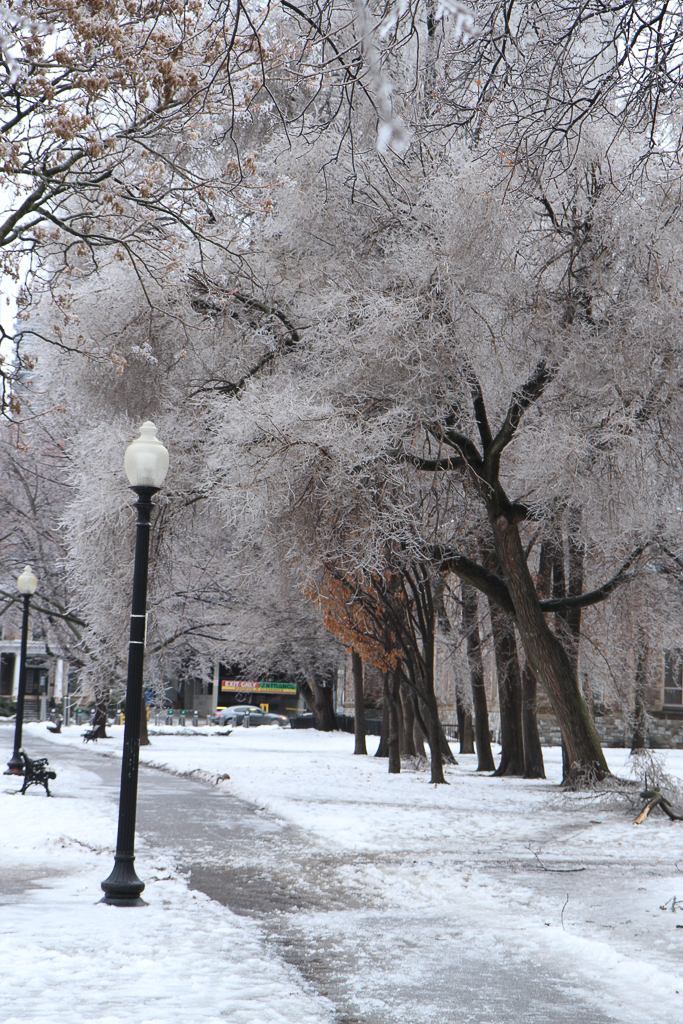

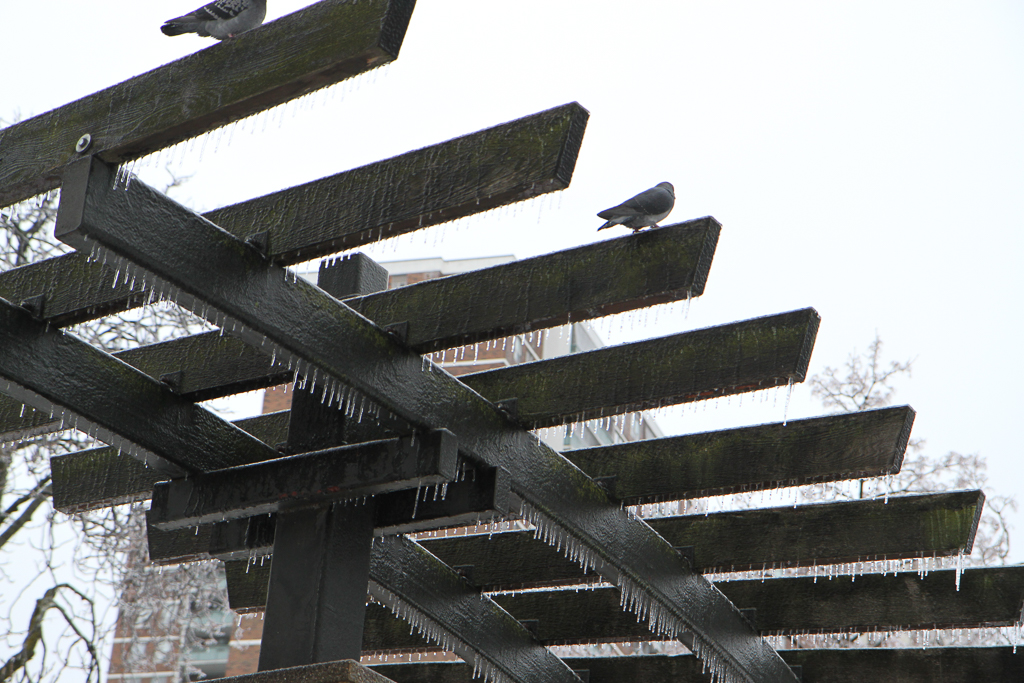
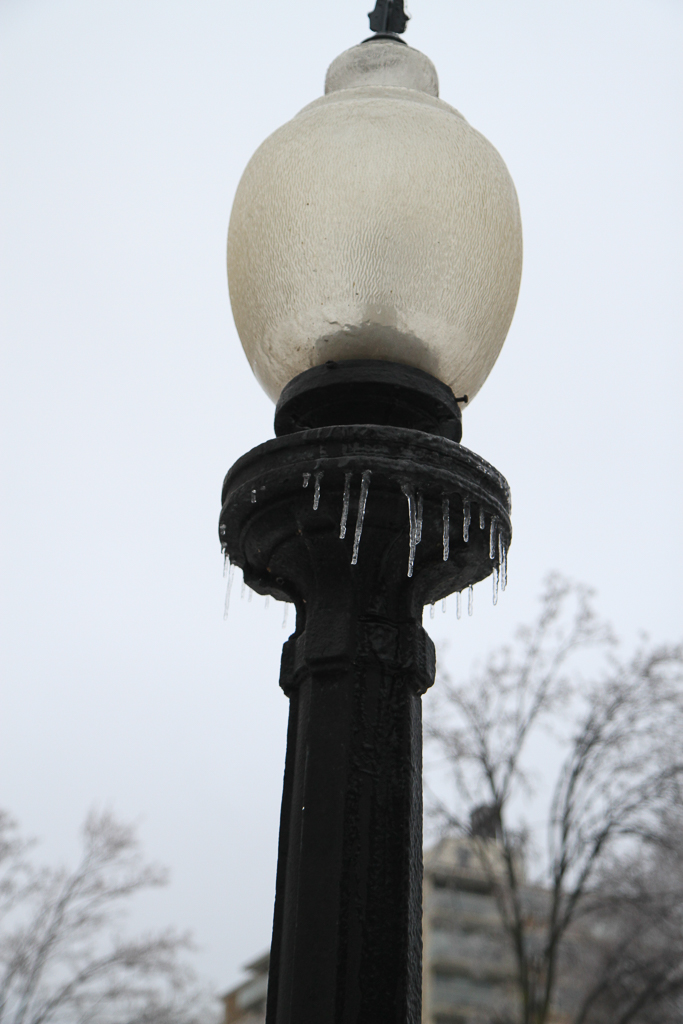
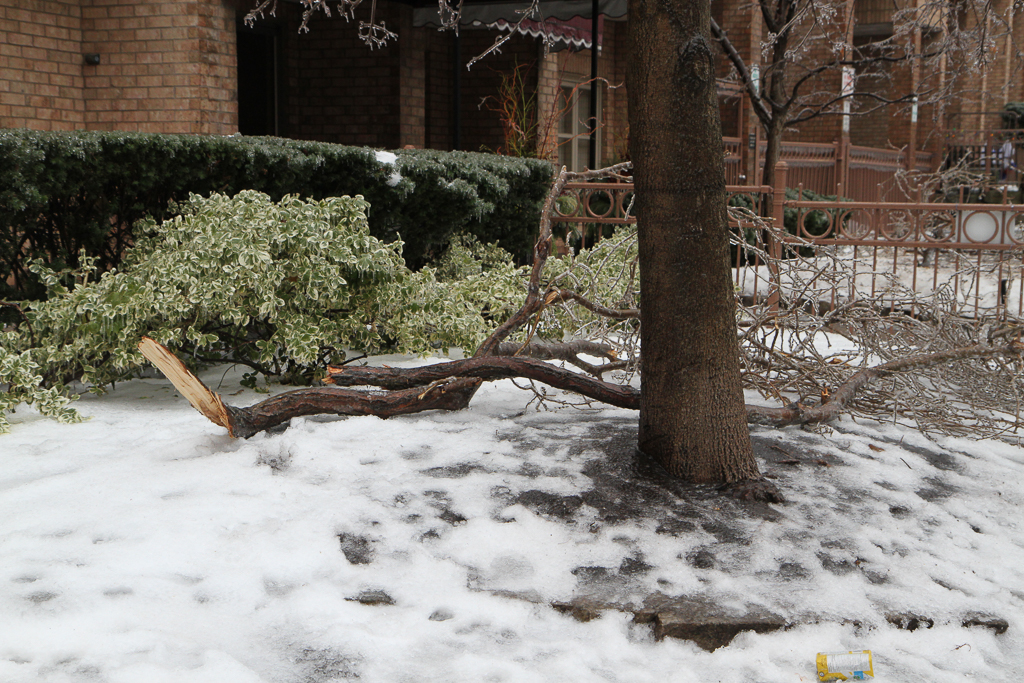
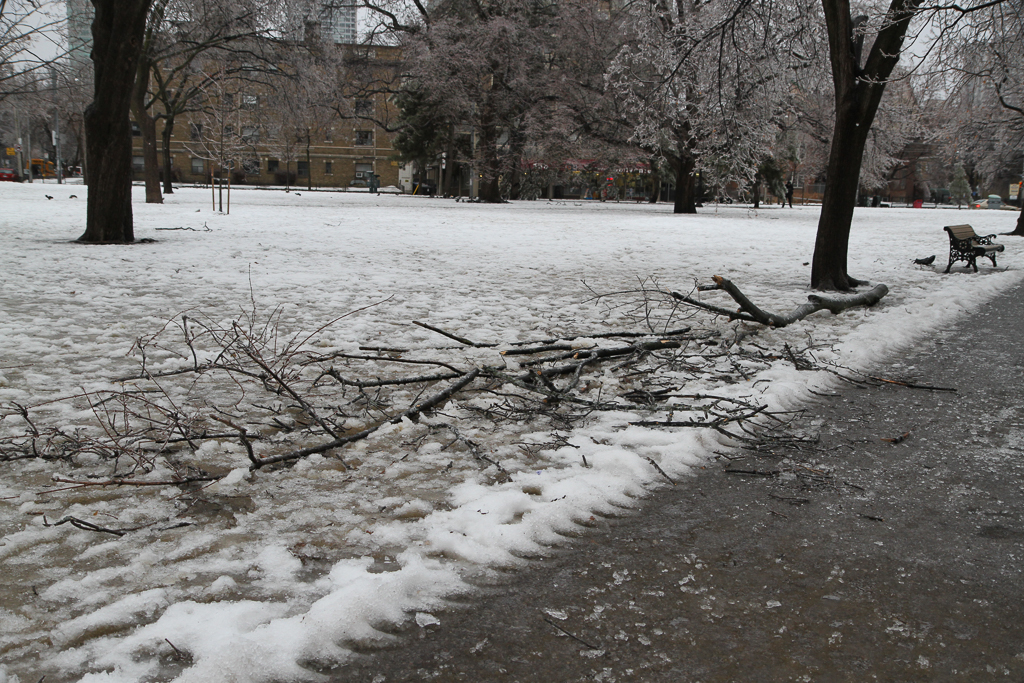

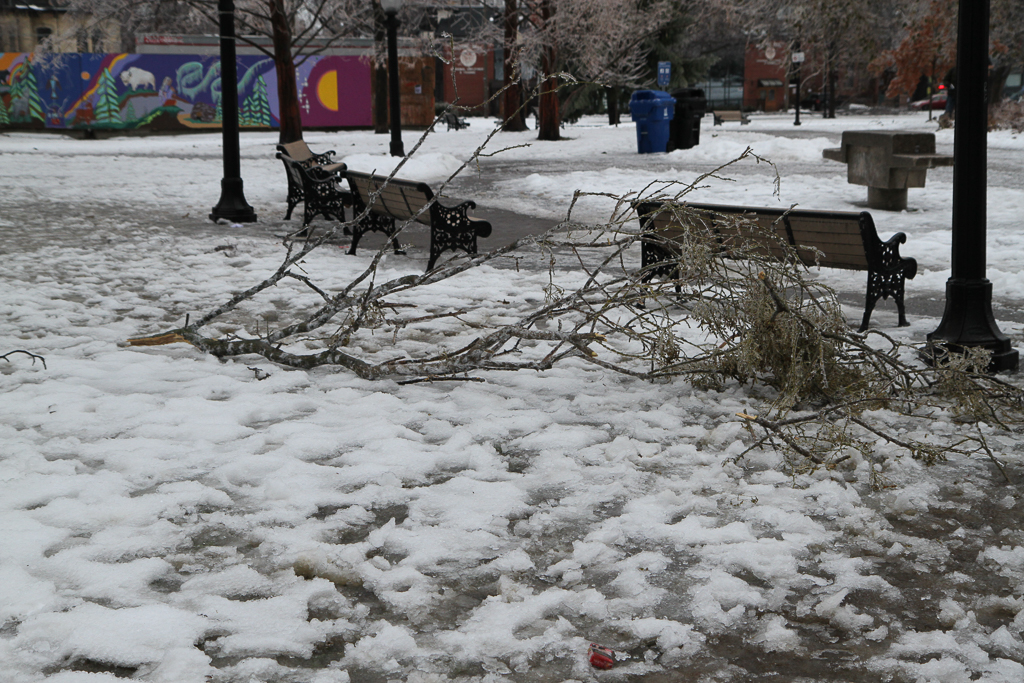

At the time I remember thinking how weird everything felt; the city had mostly came to a halt throughout the storm. The ice storm of 2013 remains yet another Toronto vignette I will never forget.
1 Stats courtesy of The Weather Network
Finding a few dry moments from the incessant rain of late, I took a little spin last night to see some of the Christmas lights in Rosedale and on Bloor Street East.


The owners of this Rosedale home went to some *serious* effort to recreate The Grinch Who Stole Christmas, along with a miniature Whoville:


Allegedly, there are 138 lit Christmas trees along Bloor Street this Christmas; I never stopped to count…


I have always admired this sculpture but it seems to disappear amongst all the grey facades of the surrounding buildings.…

11 Walmer Road was originally clad as it is clad post 2018 with black bricks and white bricks etc. They…
I gave always loved Richmond Street. It encompasses Industrial, commercial and residential. So many lovely buildings as it winds its…
I agree with Bob K . And the weather was super warm . A perfect day for a parade. Being…
© 2026 TO Cityscapes
Theme by Anders Noren — Up ↑

Join my mailing list to receive an email alert when I publish a new post.


Yes Marvin. I have been to a couple of these festivals in the past. It is a HUGE EVENT now…